Why Drawing Matters in Early Childhood Development 🧠
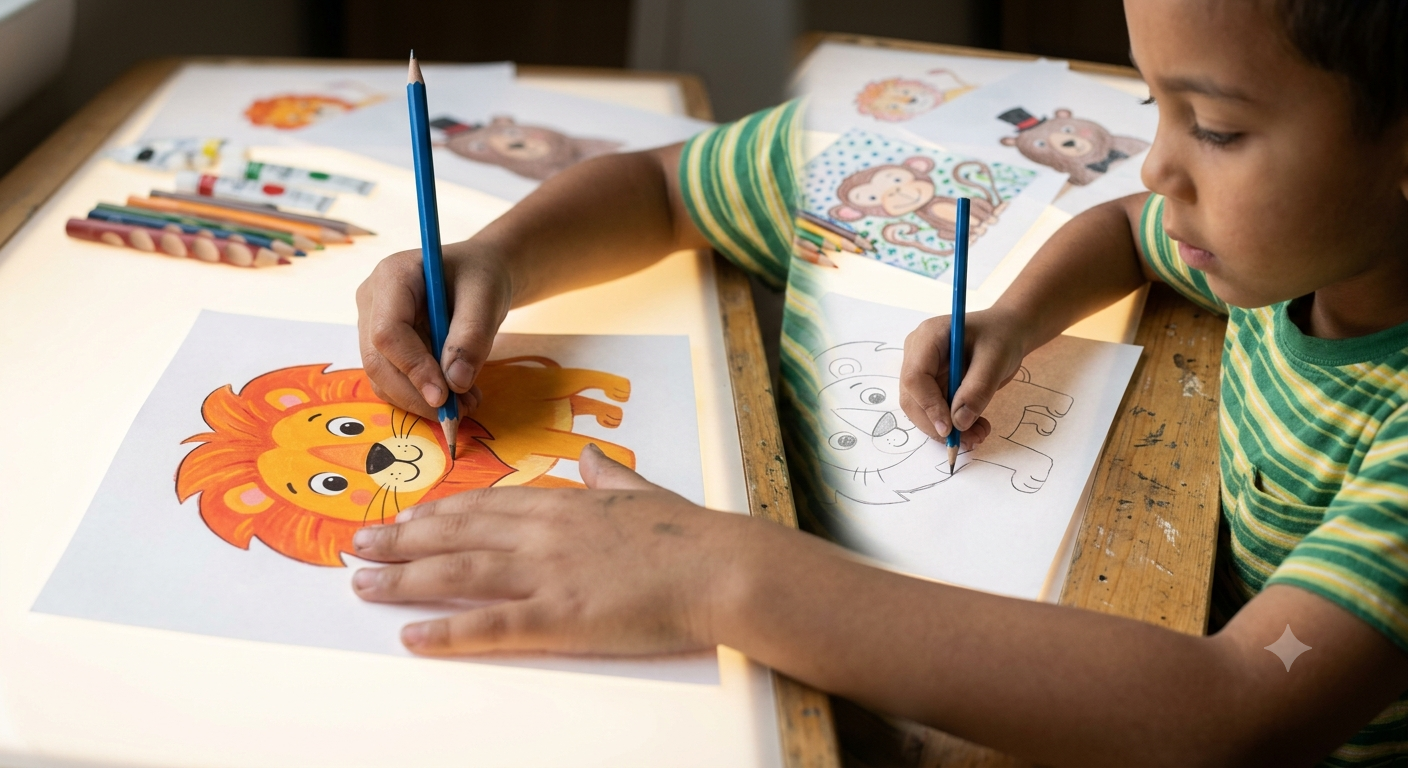
Long before children learn to read sentences or write their names, they grab a crayon and make their mark. A wobbly purple spiral on scrap paper, a yellow sun with dozens of rays, or a proud drawing of a four-legged pet—these aren't just cute refrigerator decorations. Drawing is your child's first visual language, a powerful engine of early neurological development, and the bridge between raw imagination and real-world motor control.
When a child draws, nearly every region of their brain lights up. From the visual cortex processing shapes and colors to the motor cortex guiding the fingers, drawing is one of the most cognitively demanding—and rewarding—activities a young child can engage in.
1. Fine Motor Mastery & Pencil Grip Formation
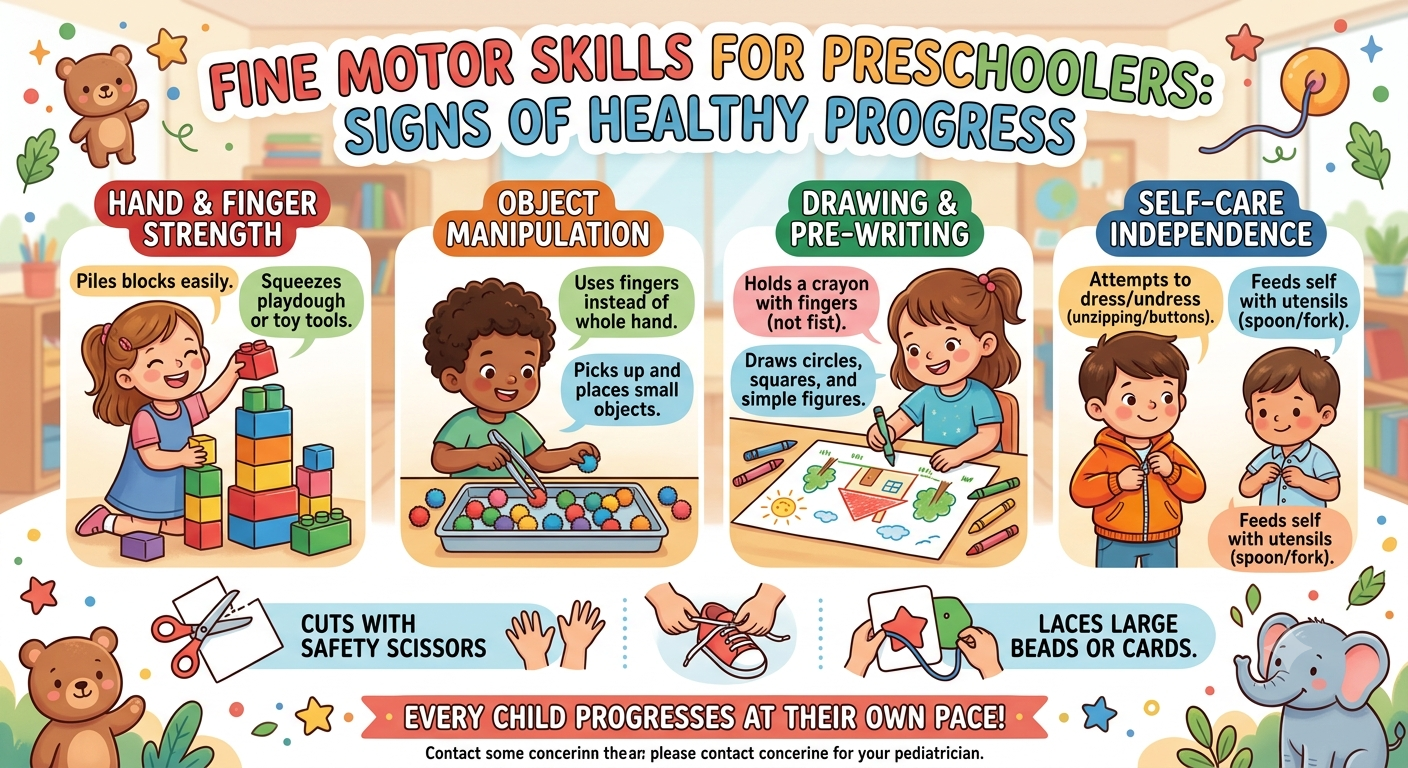
Before a child can write letters or hold a pencil comfortably in kindergarten, they must develop the small muscles in their hands, wrists, and fingers (known as the pincer grasp and finger-thumb web space).
- Muscle Endurance: Guiding strokes across a canvas or page builds isometric muscle endurance so little hands don't tire out during school writing tasks.
- Bilateral Coordination: Learning to stabilize the page with one hand while drawing with the other teaches the brain to coordinate both sides of the body simultaneously.
- Controlled Pressure: Kids learn how hard or soft to press to create light sketches versus bold outlines.
2. Visual-Spatial Intelligence & Geometric Foundations
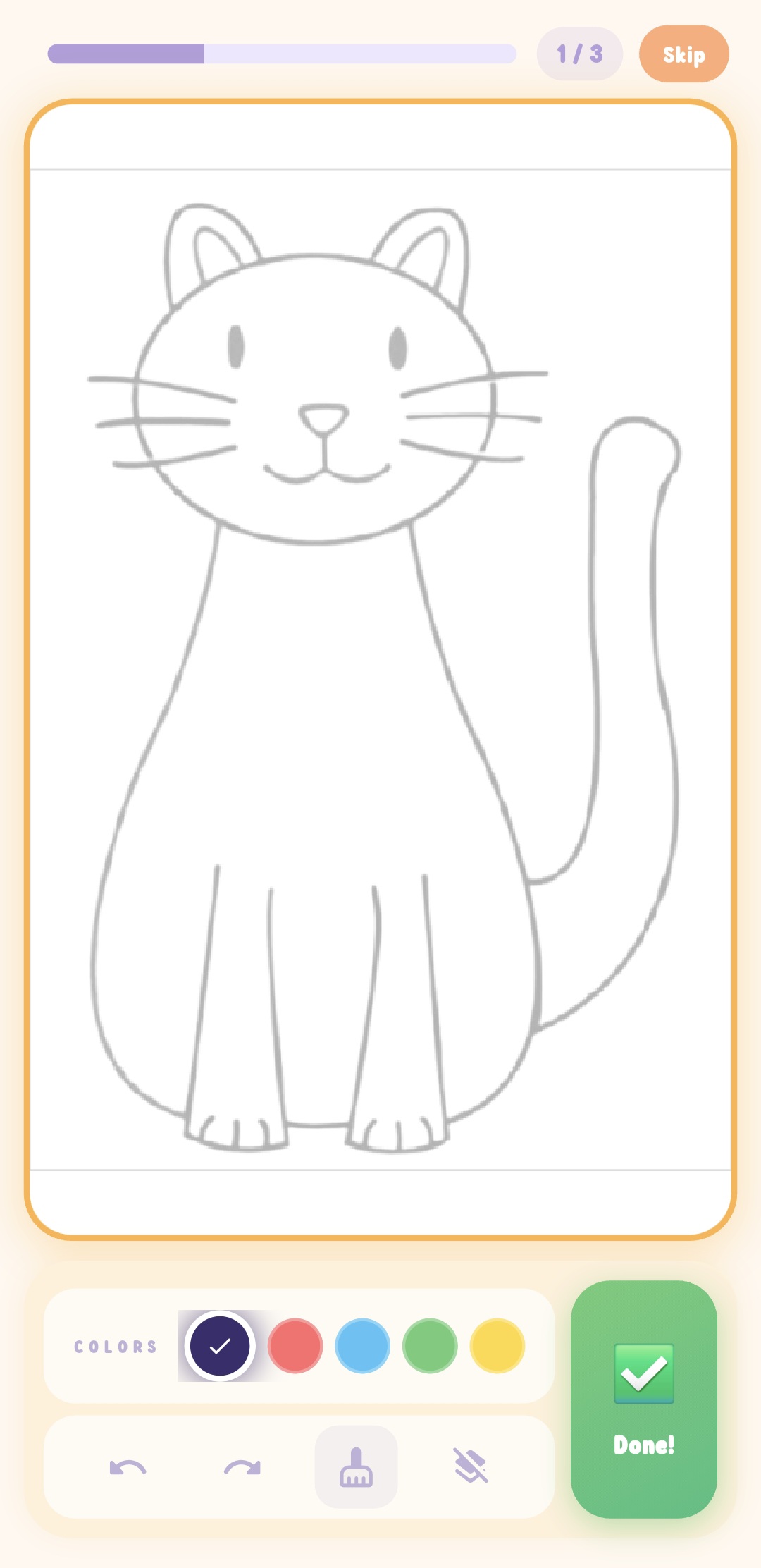
Drawing requires translating a 3D world onto a 2D surface. To draw a cat, a child must mentally deconstruct an animal into basic geometric forms:
- A round circle for the head 🟠
- Two sharp triangles for the ears 🔺
- Straight and curved lines for the whiskers and tail 〰️
This spatial breakdown is the exact same cognitive skill required for early geometry, math patterns, and spatial reasoning later in life.
3. Emotional Expression & Psychological Well-Being
Toddlers often experience big, complex emotions before they have the verbal vocabulary to express them. Drawing offers a healthy, calming outlet. When children choose bright, joyful yellows or calm blues, create dynamic action scenes, or express their daily experiences through doodles, they process emotions, build self-awareness, and find deep stress relief.
4. Focus, Patience & Problem Solving
Unlike rapid, passive video feeds that deliver instant dopamine every 5 seconds, drawing is an active, intentional creation. A child decides where a line begins, anticipates where it should curve, and navigates mistakes when lines don't meet. This develops sustained attention span, working memory, and resilience.
The GrowLittleKids Drawing Module: A Kid-Friendly Canva Canvas 🖌️
Within the GrowLittleKids educational app and web dashboard, we designed the Drawing & Creativity Canvas specifically for small fingers and boundless imaginations.
Key Canvas Features:
- 🌈 Vibrant, Kid-Safe Color Palette: 20+ carefully curated, high-contrast colors (including rainbow glitter and pastel tones) that captivate young eyes without sensory overload.
- 🖌️ Multi-Size Dynamic Brushes: From thin outline markers to thick chalk and crayon strokes, children can experiment with different line textures and thicknesses.
- ↩️ Magical Undo & Eraser Tools: The biggest barrier to toddler creativity is the fear of making an unfixable mistake. With our friendly instant-undo and soft eraser tools, children learn that mistakes are just part of the creative process—building fearless exploration.
- 💾 Save to Digital Portfolio: Children can save their artwork directly into their personal gallery, allowing parents to celebrate milestones, share digital masterpieces with grandparents, or print physical copies for the fridge.
Step-by-Step Animal Tracing: How Kids Learn to Draw (Cat, Dog, Duck) 🐱🐶🦆
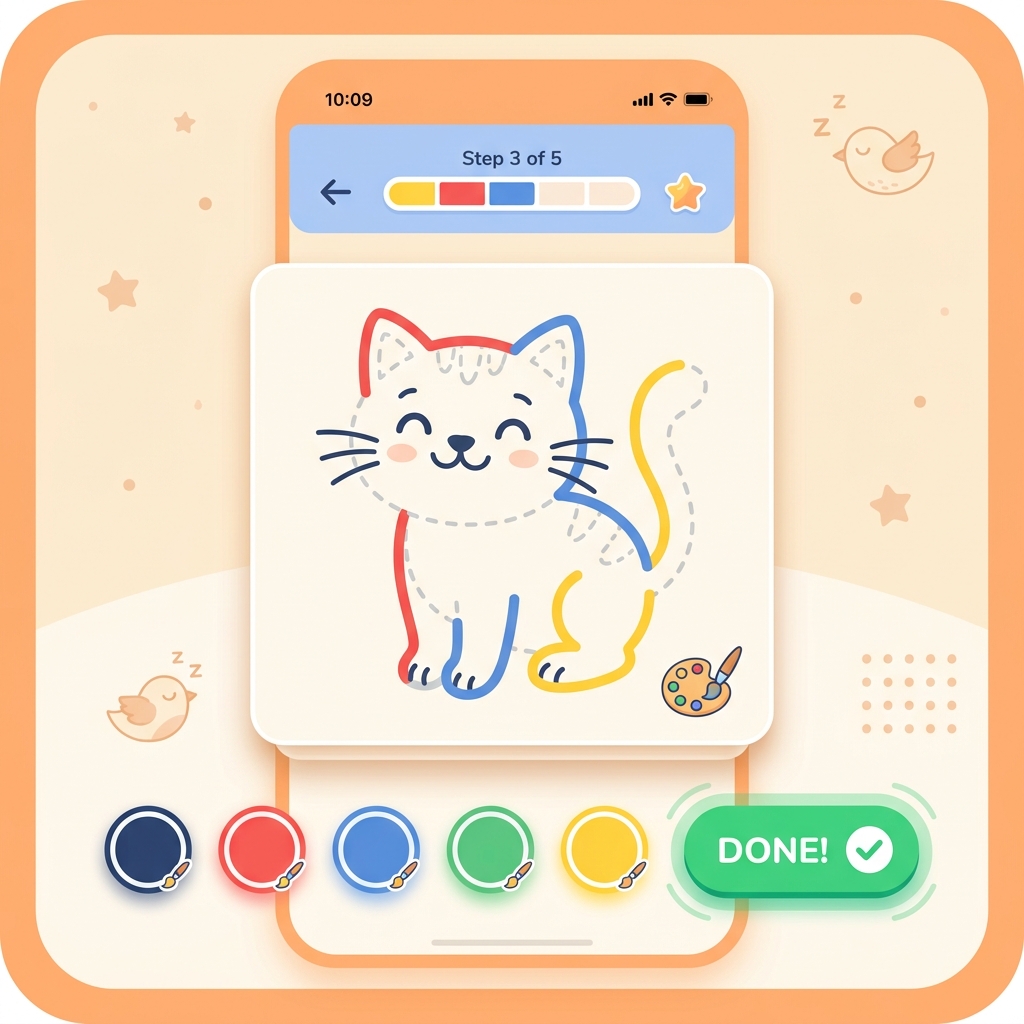
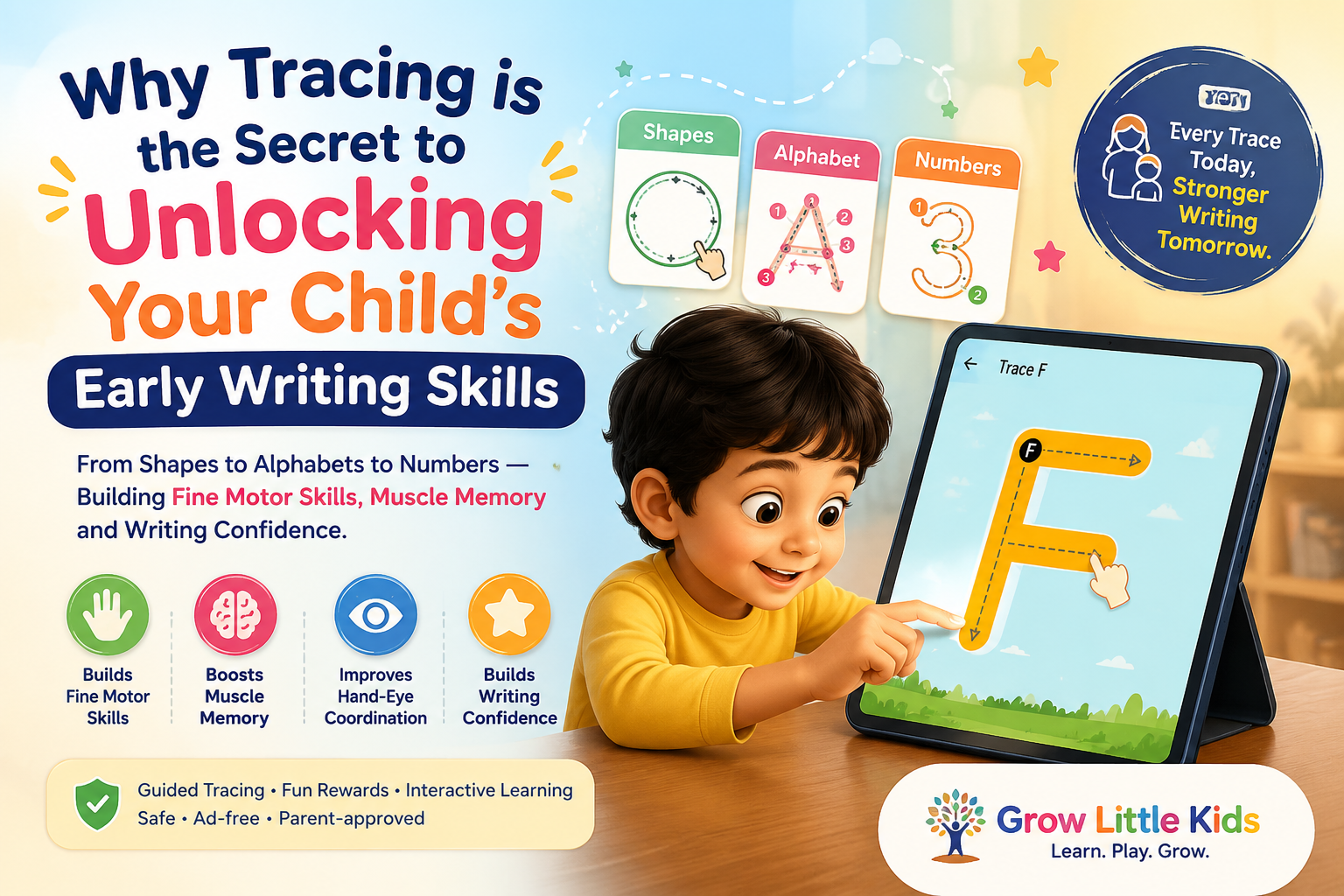
One of the standout features of the GrowLittleKids drawing module is our Step-by-Step Guided Animal Tracing System. Instead of staring at an intimidating blank canvas, children are guided through gentle, interactive 3-step milestones:
Step 1: Foundational Shape (Circle / Oval) ➔ Step 2: Distinctive Features (Ears, Head, Wings) ➔ Step 3: Character Details (Face, Whiskers, Eyes & Smile)
Level 1: The Playful Cat 🐱
- Step 1 — Big Circle Head: Children trace a large round circle 🟠 to form the cat's face, developing circular stroke control.
- Step 2 — Triangle Ears: Two cheerful triangles 🔺 are added to the top left and right corners.
- Step 3 — Expressive Face: Adding dot eyes, a cute button nose, and 6 whisker lines 😺 completes the friendly kitten!
Level 2: The Loyal Puppy Dog 🐶
- Step 1 — Round Face Base: A smooth round curve 🟠 creates the puppy's face structure.
- Step 2 — Floppy Side Ears: Children trace curved floppy ears 🐶 dropping down each side, training downward vertical stroke pressure.
- Step 3 — Cheerful Smile & Snout: Adding friendly oval eyes, a broad nose, and an open happy mouth 😄 brings the dog to life!
Level 3: The Quacking Duck 🦆
- Step 1 — Oval Body: A horizontal oval 🥚 teaches elongated elliptical wrist control.
- Step 2 — Circle Head & Neck: A smaller circular head 🟡 sits perched atop the body curve.
- Step 3 — Beak, Eye & Water Ripples: Tracing a triangular beak, a bright eye, and gentle blue water ripples 🦆 beneath completes the lake scene!
Why Tracing Builds Real Artistic Confidence
Guided tracing acts like training wheels on a bicycle. By following gentle animated dashed guidelines with visual sparkle cues and audio cheer sounds, the child's brain registers the physical motion and stroke sequences. After tracing a cat or dog 3 or 4 times on the digital canvas, children eagerly grab real crayons and draw the same shapes freely on physical paper!
The Digital Coloring Book: Infinite Creativity, Zero Mess 📚
Every parent knows the scene: caps left off markers, dried-up felt tips, broken crayons trampled into carpets, and coloring books discarded after just two scribbled pages.
The GrowLittleKids Digital Coloring Book reimagines early coloring:
- 🌿 Eco-Friendly & Zero Paper Waste: Thousands of coloring sessions without cutting down trees or filling recycling bins.
- 🧽 Mess-Free Travel Companion: Whether you're on a 4-hour flight, waiting in a doctor's office, or sitting at a restaurant table, the digital coloring book provides peaceful, purposeful entertainment without carrying bulky pencil cases.
- 🎨 Color Fill & Precision Brushing: Younger toddlers (ages 2–3) can tap to fill entire sections with instant vibrant color, while older preschoolers (ages 4–6) can switch to brush mode to practice staying within lines and blending shades.
Traditional Paper vs. GrowLittleKids Digital Drawing vs. Passive Screen Time 📊
Not all activities are created equal. Here is how active digital drawing stacks up against traditional drawing and passive media consumption:
| Feature & Impact | Traditional Paper & Crayons | GrowLittleKids Interactive Drawing | Passive Cartoons / Videos |
|---|---|---|---|
| Brain Engagement | High (Active Creation) | High (Active Creation & Guidance) | Low (Passive Staring) |
| Fine Motor Muscle Training | High (Physical resistance) | Moderate to High (Tactile tracing & grip) | Zero |
| Step-by-Step Skill Guidance | Requires constant adult drawing | Built-in animated 3-step animal templates | None |
| Mistake Anxiety & Frustration | Permanent marks on paper | Instant Undo & gentle eraser | N/A |
| Portability & Cleanup | High mess, scattered markers | 100% Mess-free, runs offline anywhere | Mess-free but non-interactive |
| Cost & Environmental Waste | Recurring costs for pads & crayons | 100% Free, zero paper waste | Subscription fees / ads |
| Child Safety & Ad-Free | Safe | 100% Free & COPPA Compliant | Frequent commercial ads |
Age-by-Age Drawing Roadmap: What to Expect from Ages 2 to 6 📅
Children naturally progress through distinct developmental art stages. Here's how you can guide and celebrate your child at every step:
Age 2–3: The Scribble & Discovery Stage
- What they do: Random, energetic arm-driven scribbles, testing color contrast, and tapping lines.
- How GrowLittleKids helps: Large brush strokes, bright primary colors, and tap-to-fill features encourage cause-and-effect learning without motor frustration.
Age 3–4: Controlled Shapes & Pre-Schematic Lines
- What they do: Connecting lines into closed circles, drawing horizontal/vertical crosses, and attempting simple stick figures.
- How GrowLittleKids helps: Level 1 & 2 animal tracing templates (Cat & Dog) teach how basic circles and triangles form recognizable characters.
Age 4–5: Schematic Storytelling & Animal Tracing
- What they do: Drawing distinct figures (houses, trees, suns, pets) with clear facial features, arms, legs, and deliberate color choices.
- How GrowLittleKids helps: Level 3 tracing (Ducks, Birds, Vehicles), multi-layer coloring, and color blending tools encourage storytelling.
Age 5–6: Realistic Details & Spatial Scenes
- What they do: Drawing scenes with ground baselines, sky, proportional sizing, and intricate decorative patterns.
- How GrowLittleKids helps: Freehand Canva canvas mode with fine-tip brushes, stamps, and portfolio export gives young artists full creative freedom.
4 Fun Drawing Games for Parents and Kids at Home 🏡
- 🐾 "Guess My Animal" Drawing Relay: Open the GrowLittleKids drawing canvas. Have your child draw step 1 and step 2 of an animal while you try to guess what animal it is before they draw the final details!
- 🌈 Rainbow Color Challenge: Challenge your child to draw a scene using only 3 specific colors (e.g., orange, purple, and green). Limiting choices sparks inventive problem-solving.
- 📖 Make Your Own Storybook: Have your child draw 3 sequential pictures (e.g., a cat meeting a duck by the pond). Save each picture to their portfolio, and together narrate an original bedtime adventure based on their artwork!
- ✍️ Digital to Physical Crayon Swap: Have your child trace the puppy dog in the GrowLittleKids app twice. Then hand them a sheet of physical paper and a crayon to draw it from memory. Watch their face light up with immense pride when they realize they can draw it entirely on their own!
Building a Safe, Creative Future with GrowLittleKids 🛡️
At GrowLittleKids, our mission is simple: high-quality, foundational early childhood education must be 100% free and accessible to every child on earth.
- 🔒 Zero Paywalls & No In-App Purchases: All drawing templates, coloring books, and tools are unlocked from day one.
- 🛡️ COPPA-Compliant & Ad-Free: Your child will never be interrupted by loud third-party ads or popups. Read our full privacy philosophy in our kids safe learning guide for parents.
- 📴 100% Offline Capable: Create, color, and trace anywhere—even with zero internet connectivity.
- 🌟 Comprehensive Ecosystem: Explore our daily habits & motor skills guide, practice letter tracing with our ABC learning activities, test reaction speed in our standalone arcade game Wing Dash Bird, or learn more on our About Us page.
Final Thoughts: Every Child Is Born an Artist 🌟
Pablo Picasso famously said, "Every child is an artist. The problem is how to remain an artist once we grow up."
When we hand children the right tools—tools that guide without restricting, that celebrate effort instead of demanding perfection, and that make the wonders of art accessible—we give them far more than drawing skills. We give them a voice, a vibrant imagination, and the self-belief to make their unique mark on the world. 🖍️💛