How a Child's Physical Environment Affects Their Ability to Learn
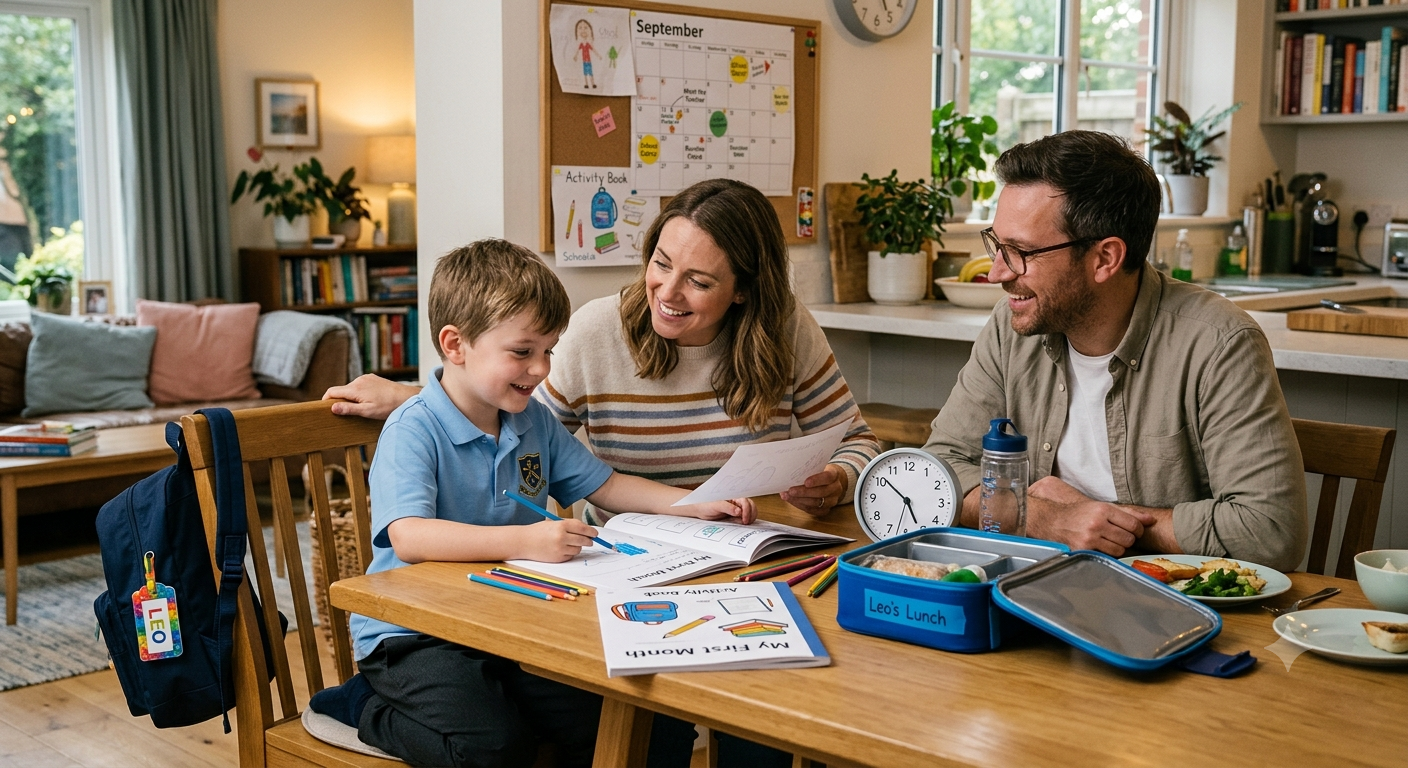
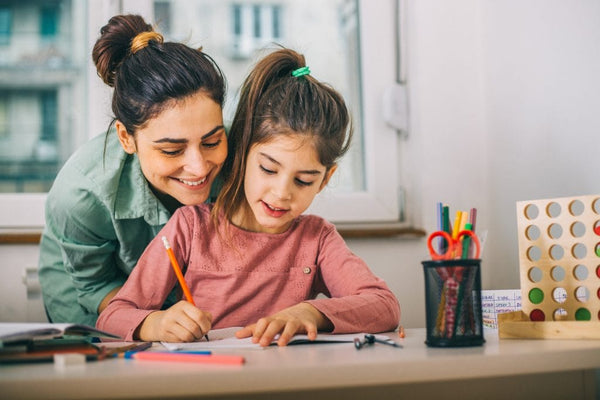
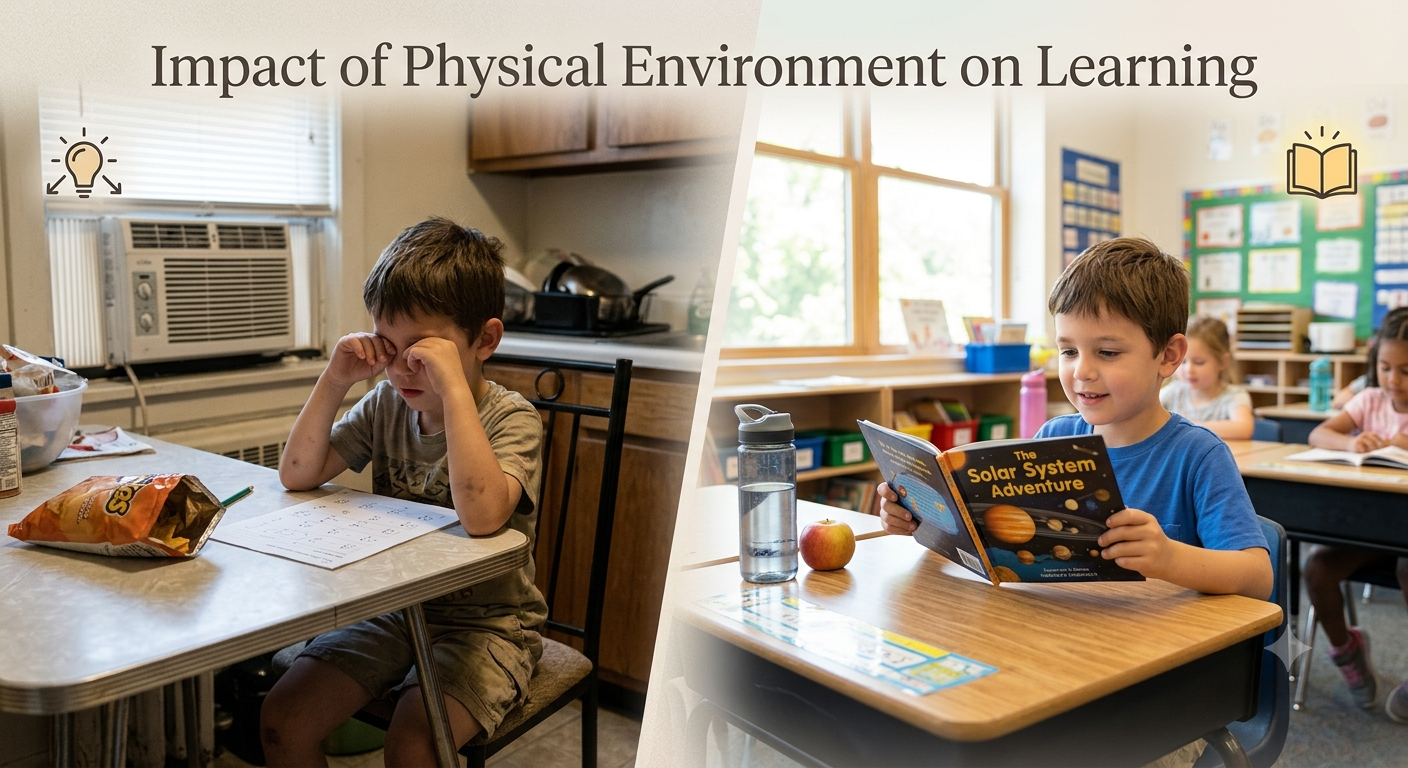
Take a moment to picture where your child draws, reads, or does homework. Is it a quiet corner with soft natural light, or the kitchen table amid the bustle of dinner prep? Is their playroom a sea of scattered toys, or a curated space where every item has a place? These details matter far more than most parents realize.
The physical environment is not a passive container for learning. It is an active, shaping force. Decades of research in environmental psychology, education, and neuroscience confirm what many teachers have long known: where a child learns directly influences how well they learn. Lighting affects alertness. Noise shapes concentration. Clutter competes for attention. Color, texture, temperature, and spatial layout all send subtle signals to a child's brain that either support or hinder cognitive work.
For young children especially, whose brains are still wiring the circuits for focus, self-regulation, and memory, the environment can either accelerate or obstruct development. A chaotic, overstimulating room makes it harder to sustain attention. A dim, cramped corner discourages persistence. Conversely, a thoughtfully arranged space invites curiosity, reduces frustration, and helps children do their best thinking.
At GrowLittleKids, we believe that creating a brain-friendly environment does not require a dedicated classroom or expensive furniture. It requires understanding how children perceive and interact with space, then making small, intentional adjustments. This guide explores the key environmental factors that affect learning and offers practical ways to optimize them at home.
What Is the Physical Learning Environment?
The physical learning environment includes every tangible element a child encounters during learning or play: the furniture, lighting, sounds, colors, textures, air quality, temperature, and spatial organization. It also includes the sensory load of the space—how much visual, auditory, and tactile information is competing for a child's attention at any given moment.
Unlike adults, children are still developing sensory filtering, the ability to tune out irrelevant stimuli. A ticking clock, a flickering bulb, or a pile of toys in peripheral vision can pull cognitive resources away from the task at hand without the child even realizing it. This means children are more vulnerable to environmental distractions than grown-ups, and more responsive to environmental supports.
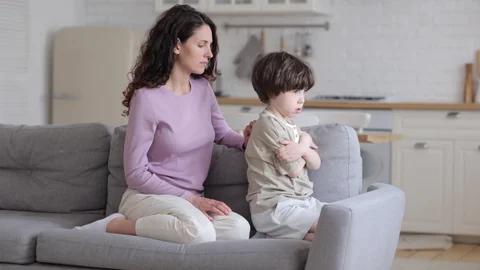
The learning environment also carries emotional weight. A warm, predictable space signals safety. Safety, in turn, frees up mental bandwidth for exploration and challenge. A cold, cluttered, or unpredictable space can trigger low-level stress, which activates the body's alert systems and makes deep learning difficult.
Key Environmental Factors and How They Shape Learning
Not every element of a room carries equal weight. Research points to several factors that have outsized influence on a child's ability to focus, process information, and retain what they learn.
1. Lighting and Visual Comfort
Light is one of the most powerful regulators of human physiology. Natural light supports circadian rhythms, boosts mood, and enhances alertness. Studies show that children in classrooms with ample daylight perform better on standardized tests and show fewer signs of attention fatigue. Conversely, harsh fluorescent lighting can cause eye strain, headaches, and hyperactivity in sensitive children.
At home, prioritize:
- Natural light: Position reading and writing areas near windows, but avoid direct glare on pages or screens.
- Warm artificial light: Use lamps with warm-toned LED bulbs rather than overhead fluorescents for evening learning.
- Adjustability: A dimmable lamp allows children to modulate brightness based on task and time of day.
Poor lighting does not just cause discomfort. It forces the brain to work harder to decode visual information, leaving less energy for comprehension and memory.
2. Noise and Auditory Load
Complete silence is neither necessary nor realistic for most families. However, the type and predictability of sound matter enormously. Consistent background noise—like a white noise machine or soft instrumental music—can actually support focus by masking sudden, unpredictable sounds. But intermittent, loud, or emotionally charged noise (television conversations, sibling arguments, traffic) fractures attention and increases cognitive load.
Children with auditory sensitivities or attention differences are especially affected. For them, a pair of noise-canceling headphones or a designated quiet zone can make the difference between a productive afternoon and a meltdown.
Practical tips:
- Turn off television and device notifications during focused activities
- Use soft background music without lyrics for independent work
- Create a visual signal (a flag, a sign, or a light) that tells family members when quiet time is in effect
- Consider a white noise machine for children who are easily startled by household sounds
3. Clutter and Visual Order
Here is a finding that surprises many parents: children in heavily decorated classrooms with crowded walls and busy bulletin boards score lower on academic tests than children in simpler spaces. The reason is visual clutter. Every poster, toy, and dangling mobile competes for attention. For a brain still learning to filter, this competition is exhausting.
At home, clutter has a similar effect. A desk covered in unrelated objects, a bookshelf spilling onto the floor, or a toy box overflowing with mixed items creates what researchers call cognitive overload. The brain keeps scanning the environment for relevance, burning mental fuel that could be used for learning.
The antidote is not minimalism for its own sake. It is intentional curation:
- Rotate toys and learning materials so only a few options are visible at once
- Use clear bins or labeled baskets so children know where things belong
- Clear the workspace before beginning a new activity
- Keep wall decorations simple, purposeful, and at or below the child's eye level
A tidy space also teaches an important life skill: external order supports internal order. Children who learn to organize their environment are better able to organize their thoughts.
4. Furniture, Posture, and Movement
A child's body position affects blood flow, breathing, and alertness. Slouching on a sofa with a workbook strains the neck and reduces oxygen intake, making sustained focus harder. Conversely, a desk and chair sized to the child's body promote what occupational therapists call dynamic sitting—small, natural postural shifts that keep the brain engaged.
Key ergonomic considerations:
- Feet on the floor: A child's feet should rest flat on the ground or a footrest, with knees at roughly 90 degrees
- Elbow height: The writing surface should be at elbow level to prevent shoulder strain
- Proximity: Materials should be within easy reach to avoid constant stretching or standing
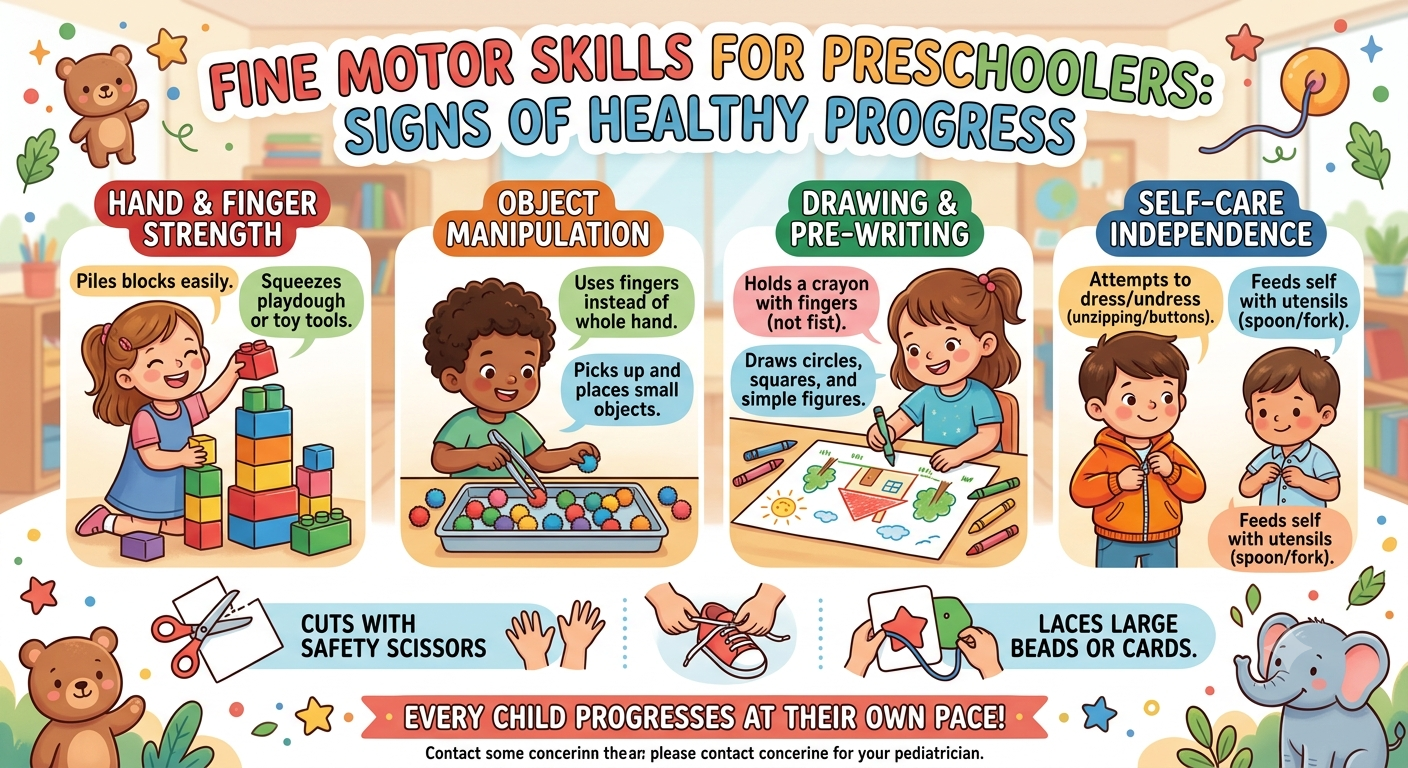
That said, rigidity is not the goal. Young children need to move. A wobble cushion, a standing desk option, or permission to pace while thinking can actually improve focus for kinesthetic learners. The environment should accommodate movement, not suppress it. If your child struggles with the fine motor demands of seated work, our guide on fine motor skills for preschoolers offers activities that build the hand strength and coordination needed for comfortable writing and drawing.
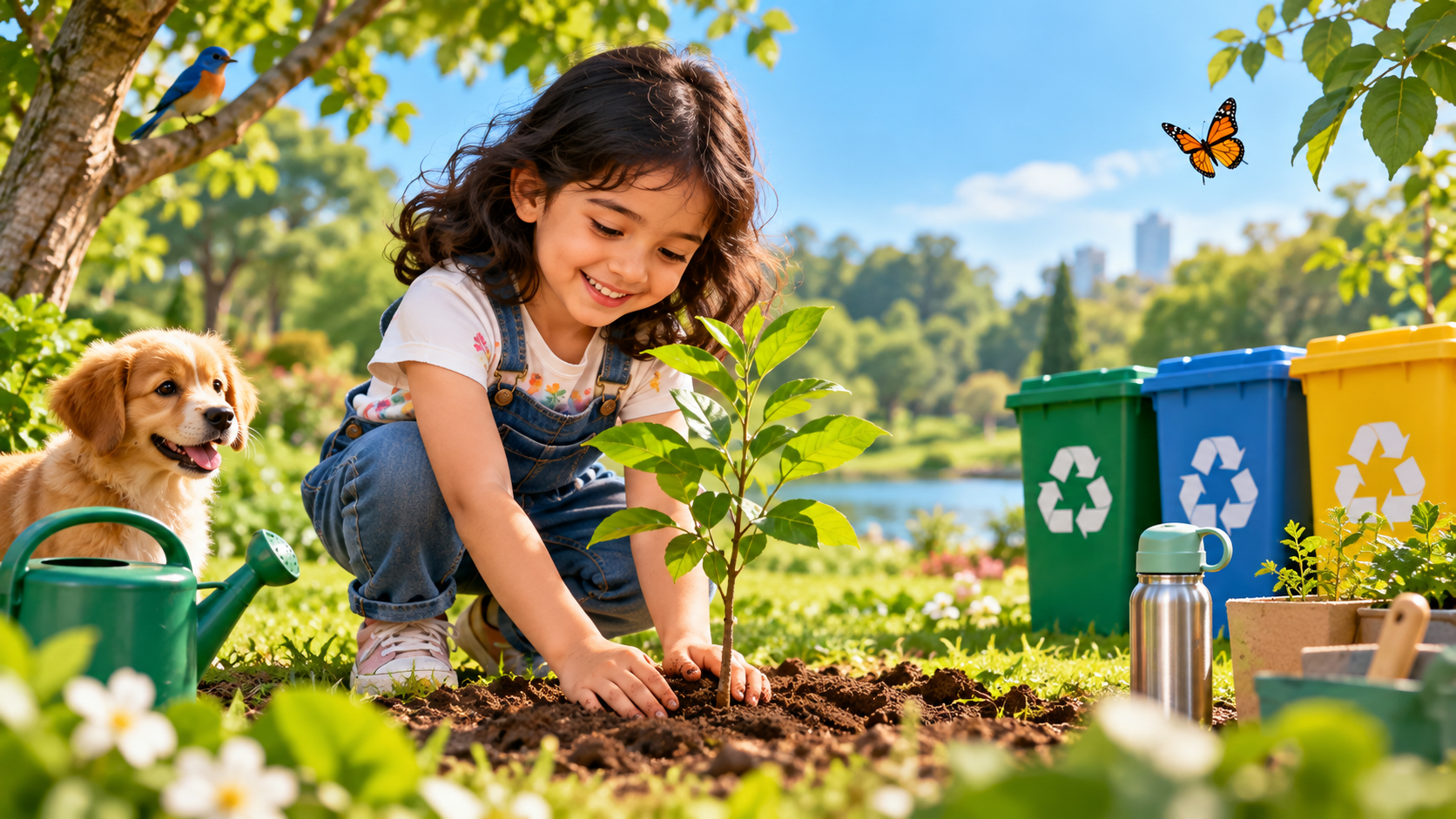
5. Access to Nature and Natural Elements
Views of greenery, houseplants, natural materials, and outdoor learning opportunities all correlate with improved attention, reduced stress, and enhanced creativity. This phenomenon, often called attention restoration theory, suggests that nature engages the brain in a gentle, involuntary way that allows directed attention to recover.
You do not need a forest in your backyard to benefit:
- Place a few low-maintenance plants in the learning area
- Use natural materials like wood, cotton, and stone in furniture and decor
- Schedule regular outdoor breaks, even if only on a balcony or in a small yard
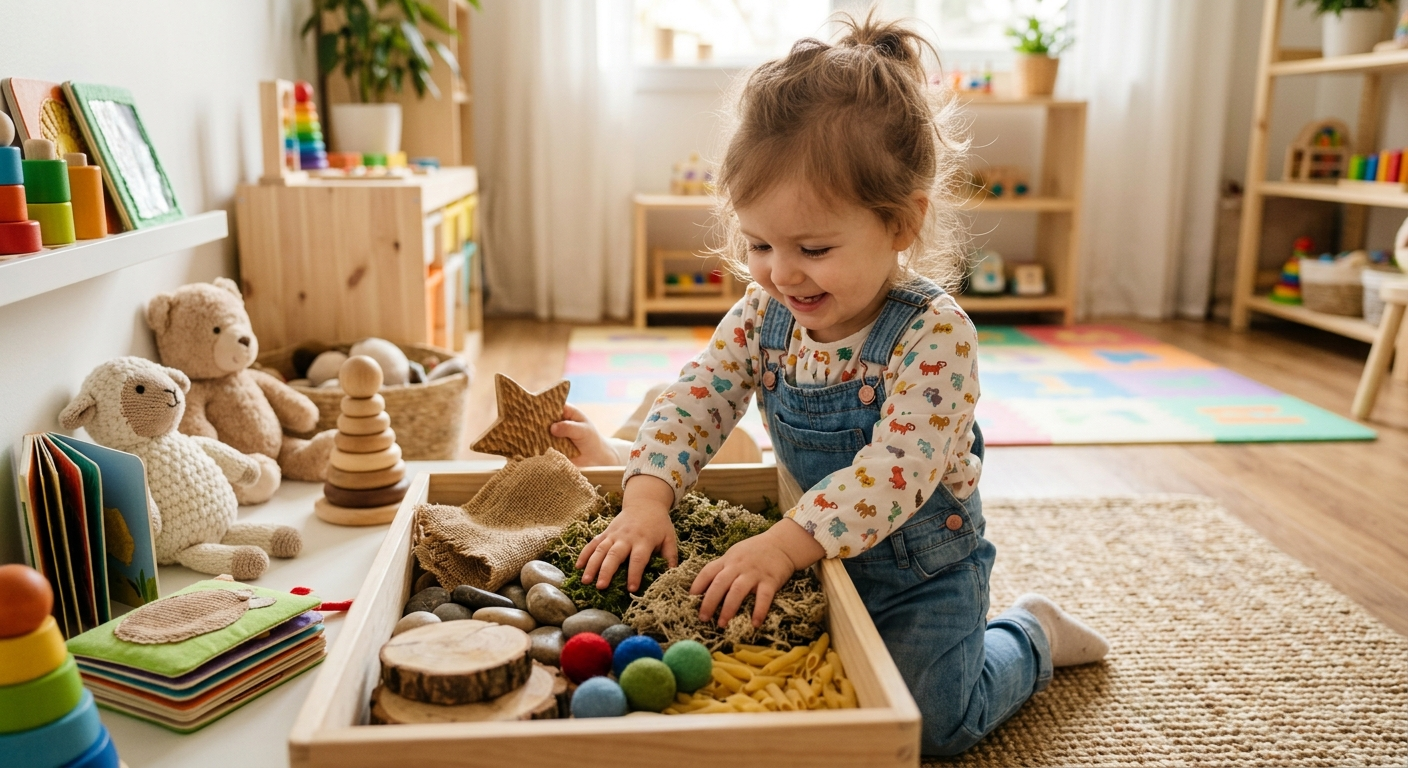
- Bring natural objects—pinecones, leaves, rocks—into sensory and science play
Even a five-minute outdoor break can reset a child's attention span and improve their return to indoor tasks.
6. Temperature and Air Quality
It is difficult to concentrate when you are too hot, too cold, or struggling to breathe stale air. Research indicates that learning performance declines when room temperatures rise above 25°C (77°F) or drop below 20°C (68°F). Similarly, poor ventilation and high carbon dioxide levels cause drowsiness and reduced cognitive speed.
Simple fixes include opening windows for fresh air, using a fan or humidifier as needed, and dressing children in layers so they can adjust their own comfort. A stuffy room is a sleepy room, and a sleepy room is a poor learning environment.
How the Environment Supports Different Types of Learning
Not all learning looks the same. A space optimized for quiet reading may not suit collaborative building or messy art exploration. Understanding how environment supports different learning modes helps you create zones rather than a single rigid setup.
Focused, Independent Work
For tasks like writing, math, or reading, children need reduced sensory input and clear spatial boundaries. A small desk facing a wall rather than a window, with only the materials needed for the current task, supports sustained attention. A visual timer can help children understand how long they are expected to maintain focus.
Creative and Exploratory Play
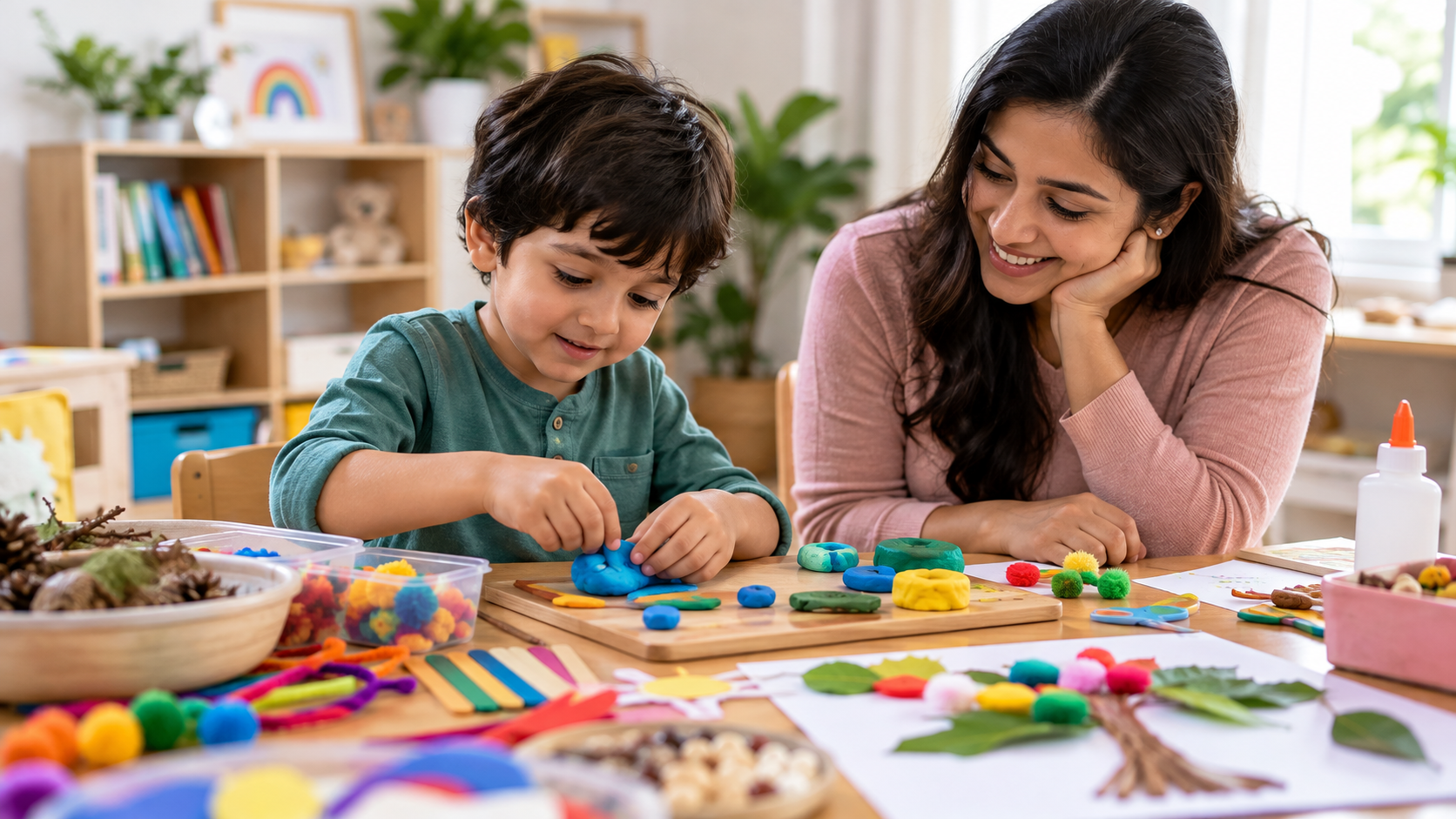
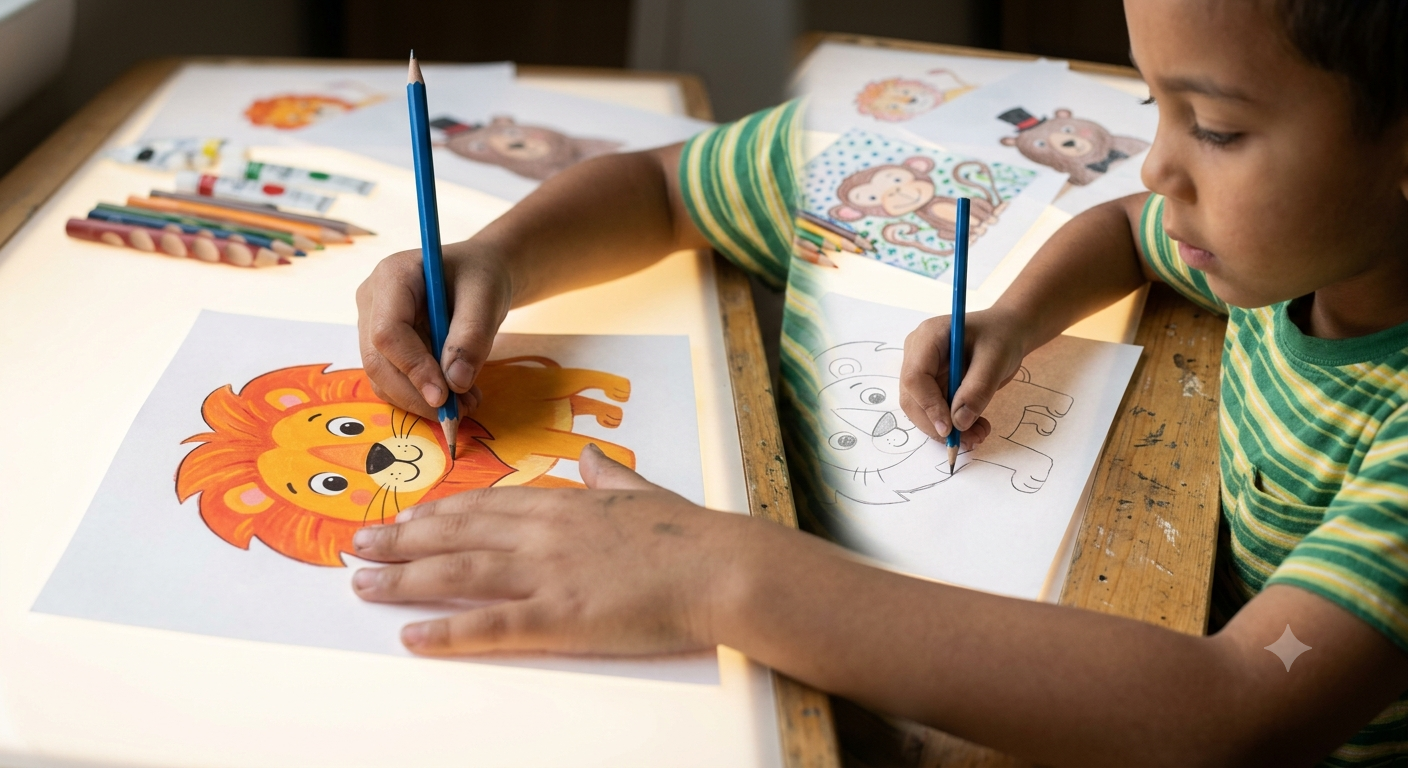
Art, building, and imaginative play thrive in spaces that tolerate mess and invite manipulation. A low table with easy-to-clean surfaces, open shelving with visible materials, and permission to spread out encourages creative risk-taking. This is where some controlled clutter is actually beneficial—variety sparks novel combinations and ideas.
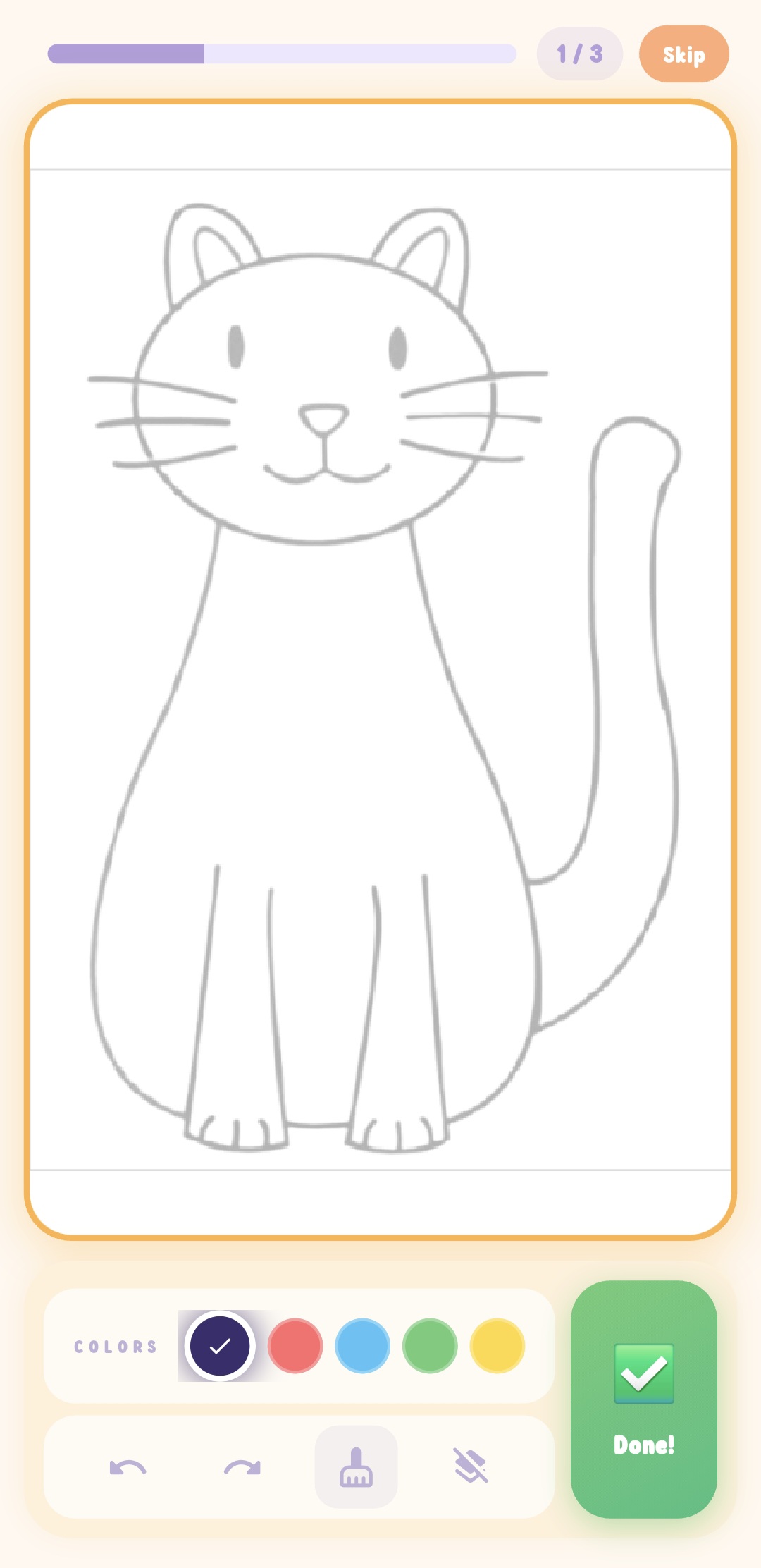
If you want to nurture creativity alongside motor development, our article on how tracing animals builds creativity and fine motor skills explains how to set up art activities that strengthen both imagination and hand control.
Collaborative and Social Learning
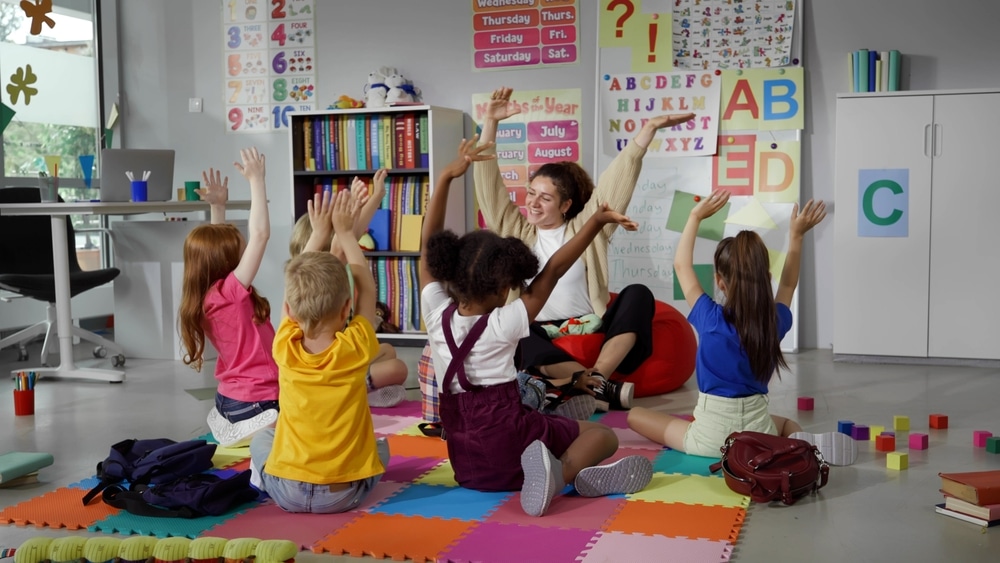
Board games, discussions, and group projects require a different spatial arrangement. A circular seating setup, a low coffee table, or a floor mat signals that this is shared space. Eye contact is easier, turn-taking feels natural, and the environment itself becomes a teacher of social skills.
Rest and Emotional Regulation
Learning cannot happen without recovery. Every environment needs a calming zone—a soft chair, a tent, a pile of cushions—where children can retreat when overwhelmed. This is not a punishment corner. It is a signal that rest is a valid part of the learning cycle. Teaching children to recognize their own need for a break, and providing a space that supports it, builds self-regulation skills that last a lifetime.
Creating a Brain-Friendly Learning Space at Home
You do not need to renovate your home to create an effective learning environment. Small, consistent changes yield significant results. Here is a practical framework to guide you.
Step 1: Observe Your Child
Before rearranging furniture, watch how your child naturally interacts with space. Do they gravitate toward bright light or dim corners? Do they focus better standing, sitting, or lying down? Do they need silence or background hum? There is no universal ideal environment—only the one that fits your child's temperament and sensory profile.
Step 2: Declutter Strategically
Remove broken toys, outgrown materials, and visual noise. Then organize what remains into clear categories. When children can see and access their own materials, they gain independence and reduce the need for adult intervention during play.
Step 3: Define Zones
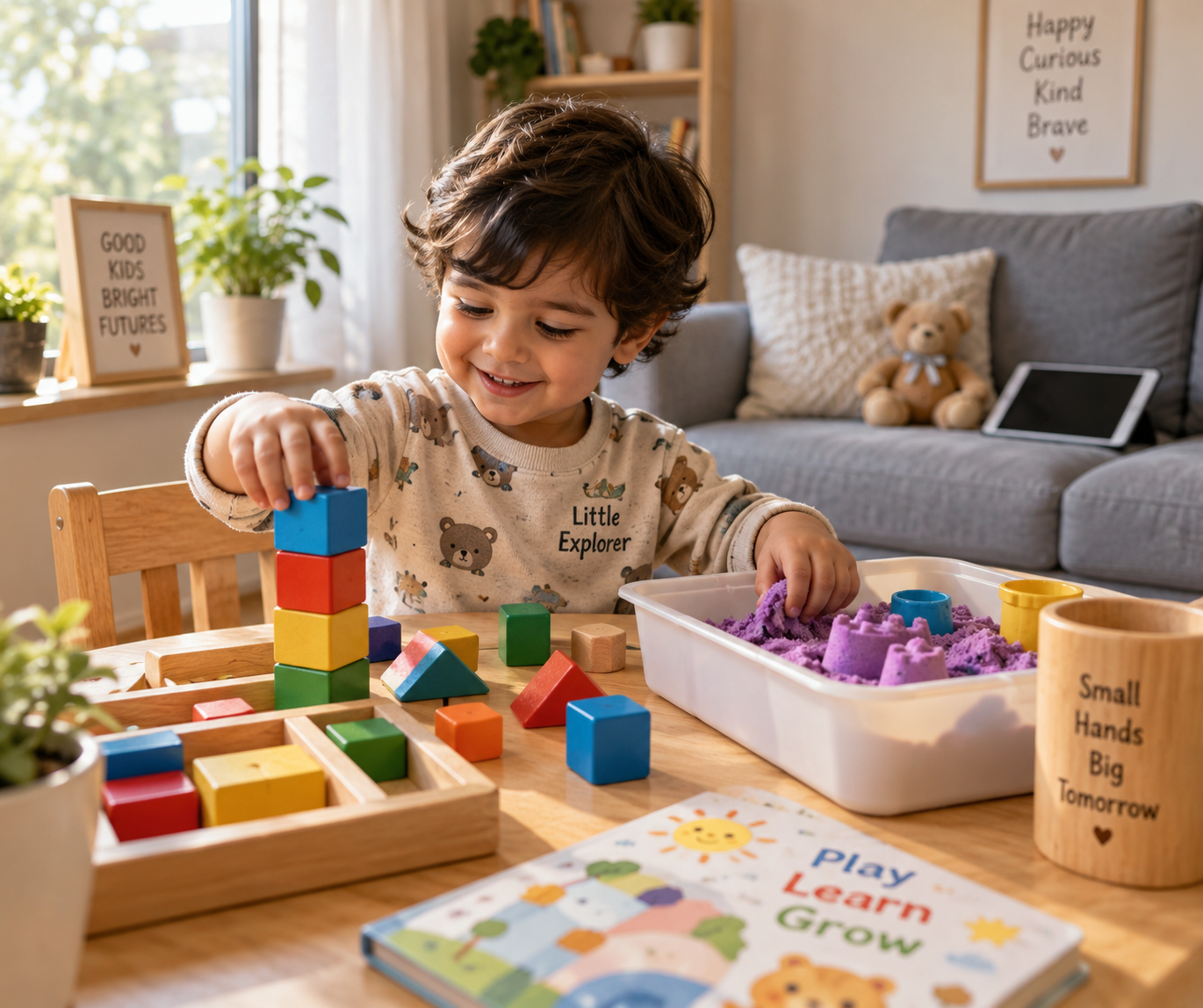
Use rugs, furniture placement, or lighting to signal different activities. A desk near a window for focused work. A low table on a mat for art. A cozy corner with pillows for reading. When spaces have clear purposes, children transition between activities more smoothly.
Step 4: Involve Your Child
Children take ownership of spaces they help create. Let them choose a lamp, arrange their bookshelf, or pick a plant for their desk. This sense of agency is itself a learning experience. It teaches that environment is not something that happens to us, but something we can shape.
Step 5: Revisit and Adjust
A learning environment is never finished. As your child grows, their needs change. What works for a four-year-old may bore a six-year-old. What suits a visual learner may frustrate a kinesthetic one. Check in every few months and adjust accordingly.
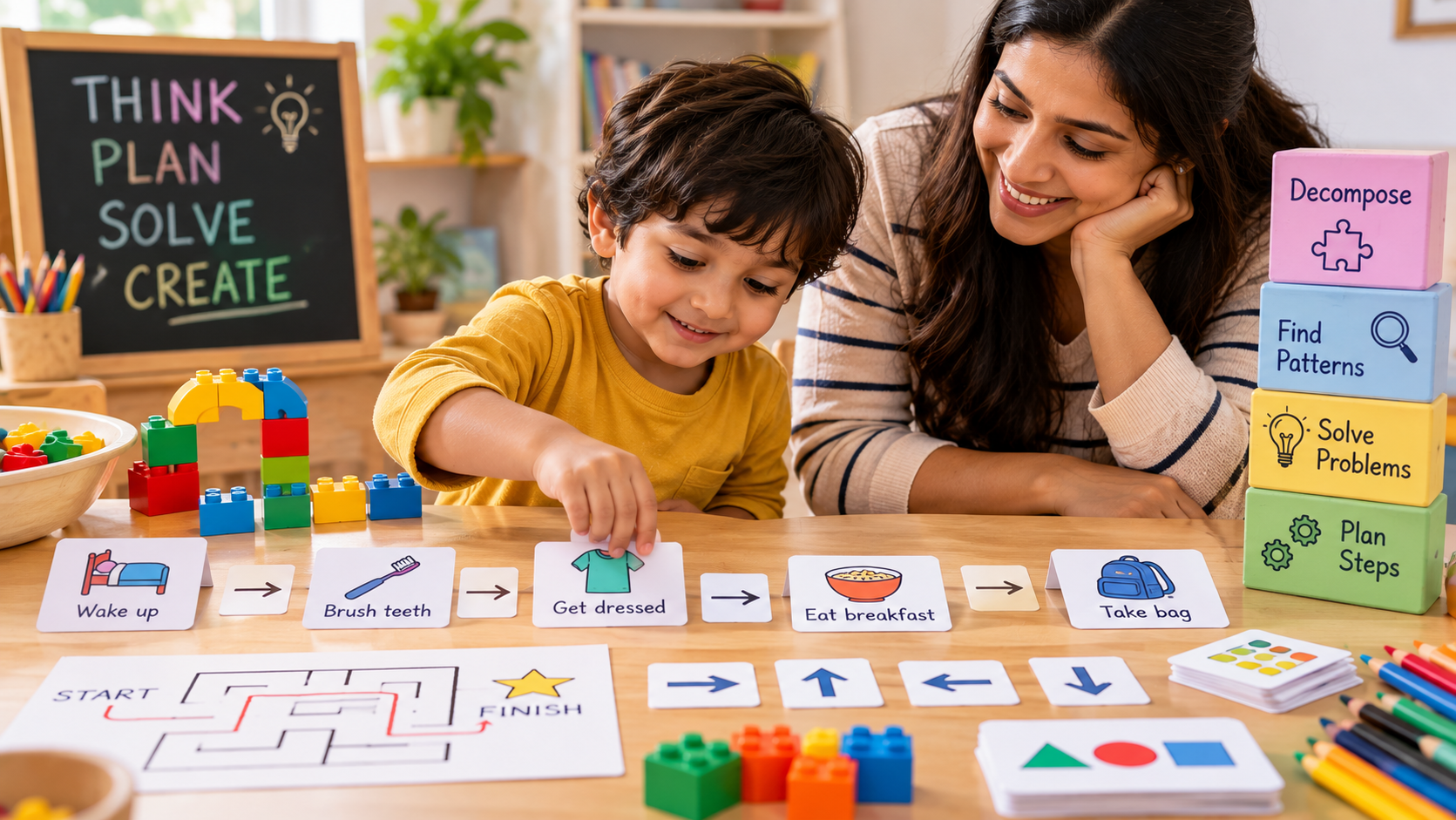
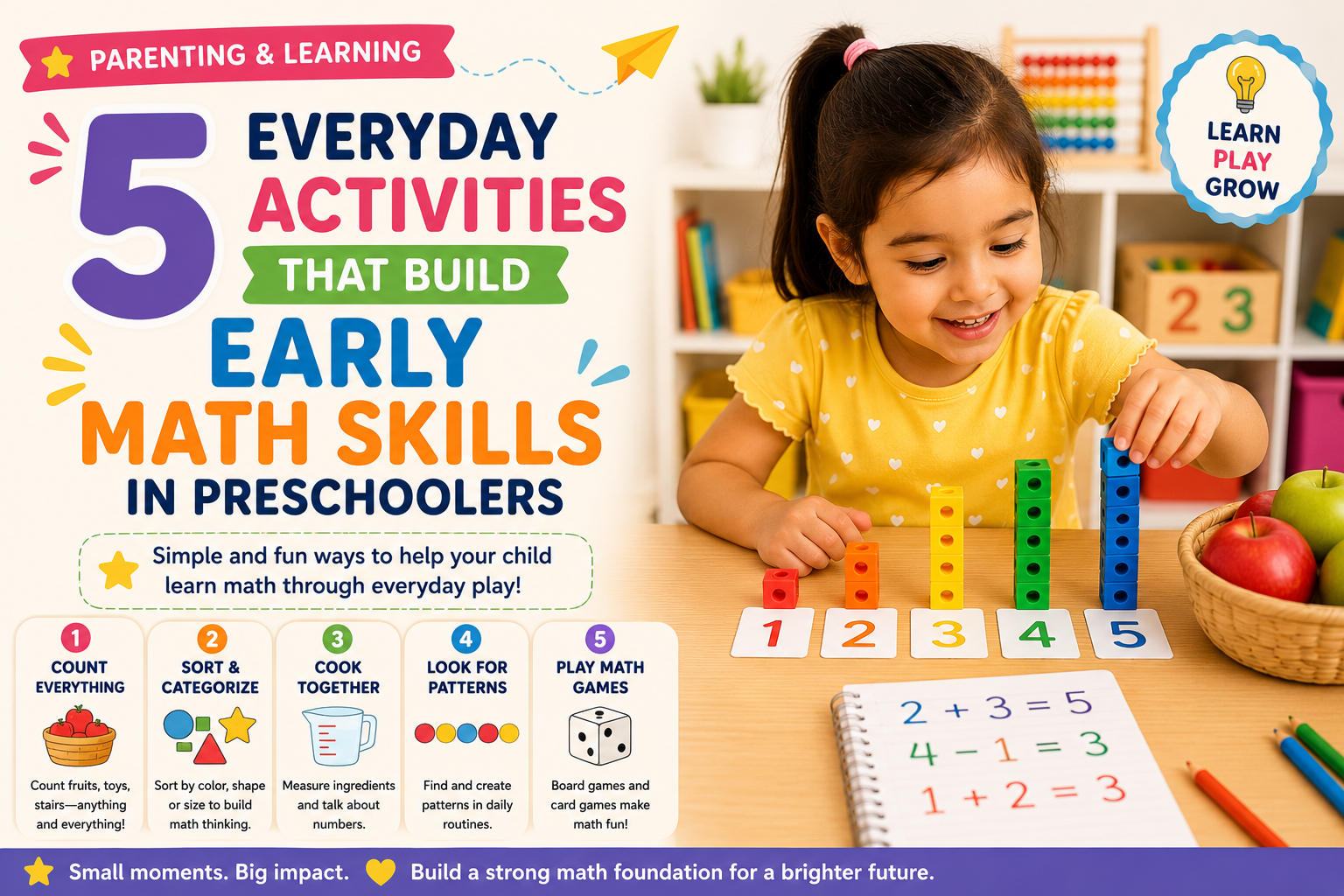
For parents looking to integrate learning into daily life beyond the physical setup, our guide on 5 everyday activities that build early math skills in preschoolers shows how ordinary moments—cooking, sorting laundry, grocery shopping—become powerful learning opportunities when the environment is intentionally structured.
Red Flags: When the Environment May Be Working Against Your Child
Sometimes the environment is the hidden culprit behind learning struggles. Consider whether physical factors might be contributing if your child:
- Becomes unusually fatigued, irritable, or distracted during short learning sessions
- Frequently complains of headaches, eye strain, or discomfort while sitting
- Avoids certain spaces in the home without being able to explain why
- Shows signs of sensory overwhelm (covering ears, squinting, fleeing the room)
- Demonstrates clear focus in one setting but not another
- Struggles to transition between activities, possibly because spatial cues are unclear
If you notice these patterns, try making one environmental change at a time—adjust the lighting, reduce clutter, or add a calming zone—and observe the effect over a week. Often, the improvement is immediate and striking. If environmental adjustments do not help, consult your pediatrician or an occupational therapist to rule out underlying sensory or vision concerns.
The Long-Term Impact of a Thoughtful Environment
The spaces we create for children send messages about what we value. A home with a designated reading nook says that stories matter. A workspace with organized art supplies says that creativity is worth protecting. A calm, predictable environment says that learning is safe and welcome here.
Over time, these messages internalize. Children who grow up in thoughtfully arranged spaces develop stronger executive function skills: they learn to plan, organize, and self-regulate because their environment has modeled those patterns. They also develop a relationship with learning that is positive rather than stressful. The association between "learning" and "overwhelm" is never allowed to form.
Moreover, environmental awareness is a transferable skill. A child who learns to adjust their chair, reduce distractions, and create order around them is building the self-advocacy tools they will need in middle school, high school, and beyond. You are not just designing a room. You are teaching them how to design their own optimal conditions for success.
For a broader look at how to build the habits and routines that complement a great learning environment, explore our comprehensive guide on how to develop learning habits before age 8. It covers everything from daily rhythms to emotional safety, pairing perfectly with the environmental strategies outlined here.
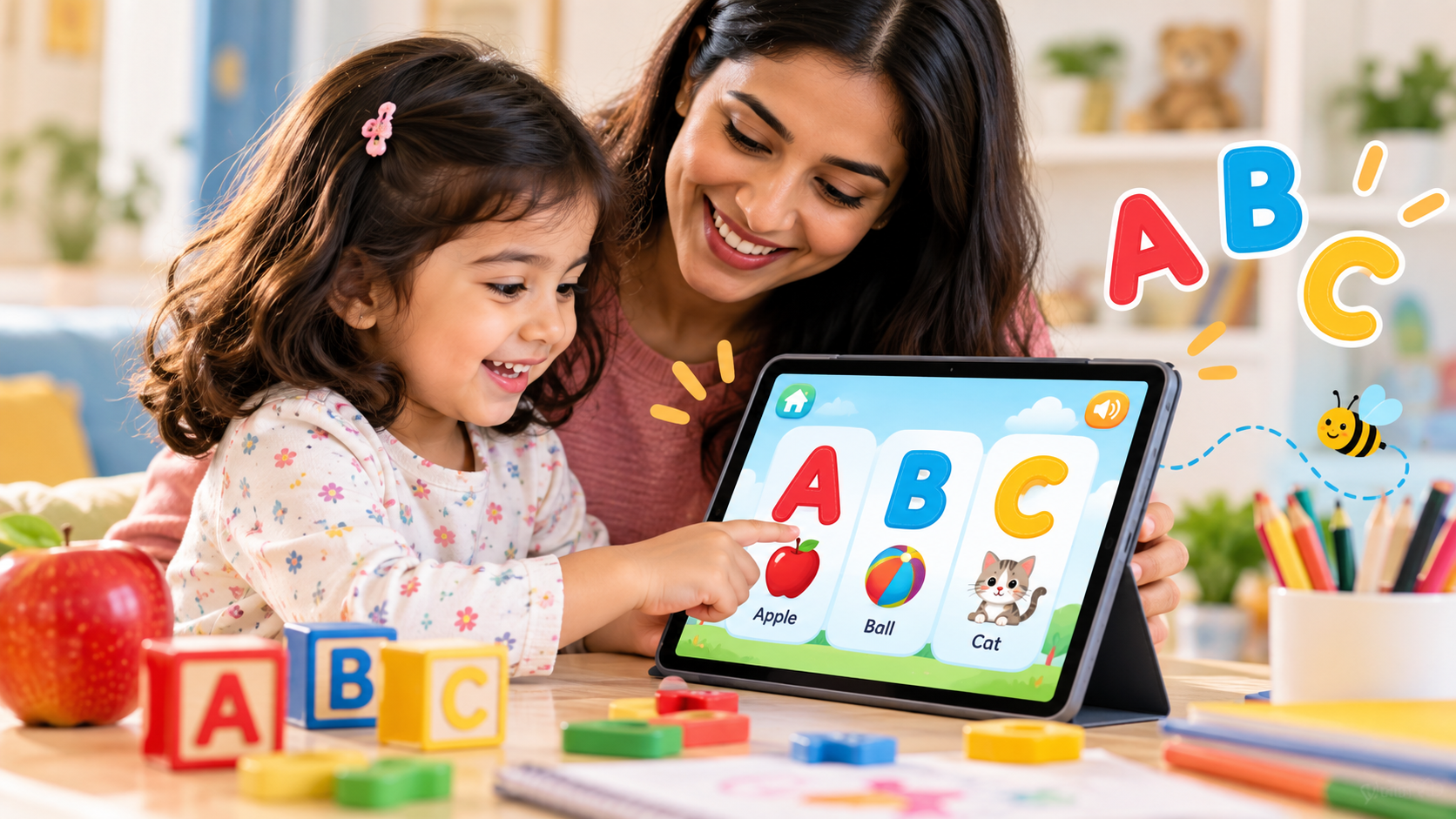
If you are also working on literacy skills, our post on fun ABC learning activities for toddlers offers playful ways to turn your newly optimized space into a language-rich environment.
Final Thoughts
The physical environment is a silent teacher. It teaches children whether they are expected to sit still or move freely, whether their work is valued enough to have a dedicated place, and whether calm or chaos is the norm. When we design spaces with intention, we remove invisible barriers to learning and replace them with invisible invitations.
You do not need perfection. You need presence and thoughtfulness. A single cleared desk, a well-placed lamp, or a basket of books within reach can change the way your child approaches an entire afternoon of learning. Start small. Observe closely. Adjust gently. The environment will do the rest.
At GrowLittleKids, we are dedicated to helping you create the conditions in which children flourish. For more expert guidance on learning environments, developmental activities, and parenting strategies, visit our full blog.