The Internet Gave Our Kids the World. It Also Opened a Door We Didn't Lock.
Remember when 'going outside to play' was the only concern? Today, millions of children navigate an online world that adults themselves find overwhelming — and they're doing it mostly unsupervised.
We're not here to scare you. We're here to prepare you.
Below are the most real, most common dangers children face on the internet — and what you can actually do about each one.
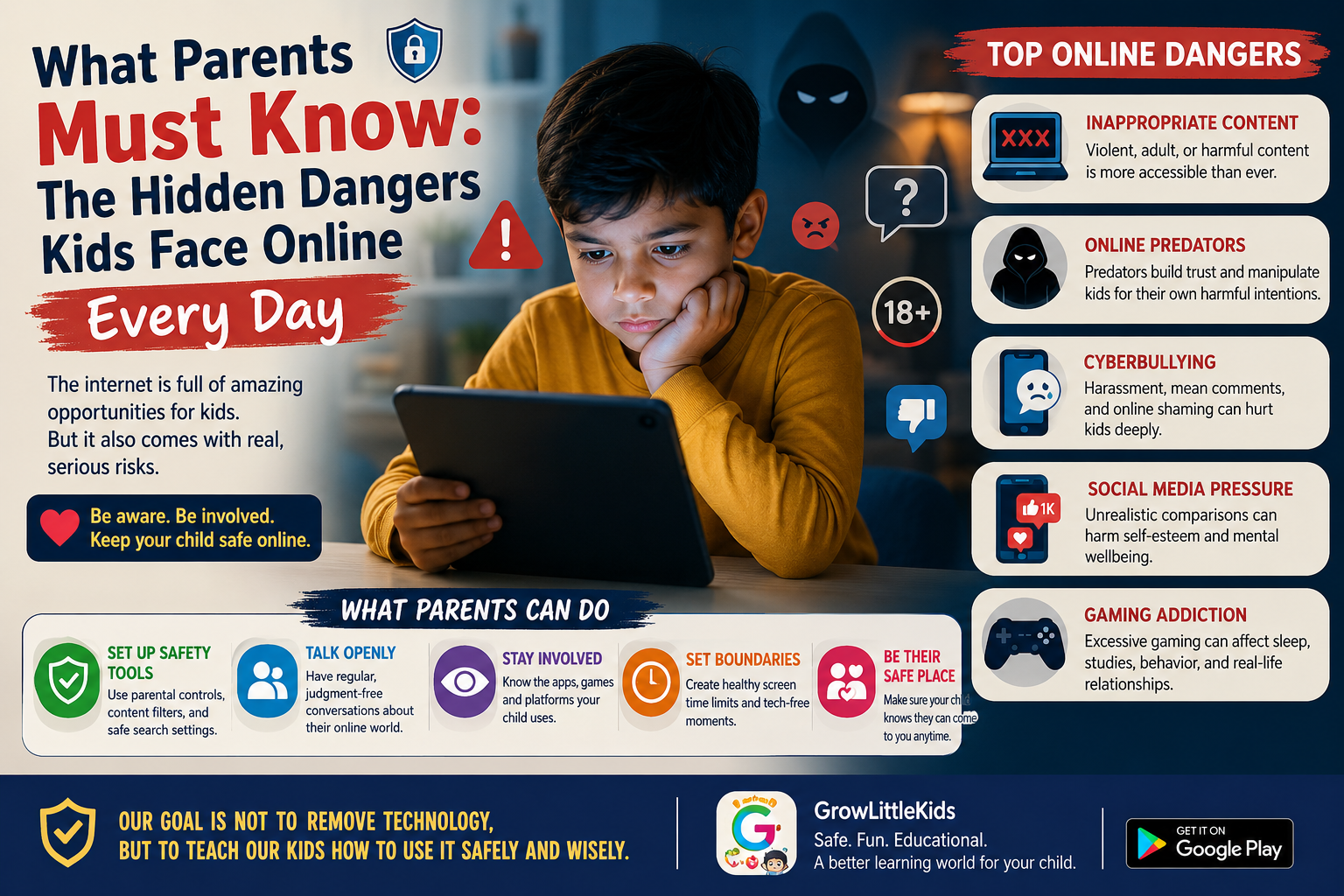
1. Inappropriate Content — It's Just One Click Away
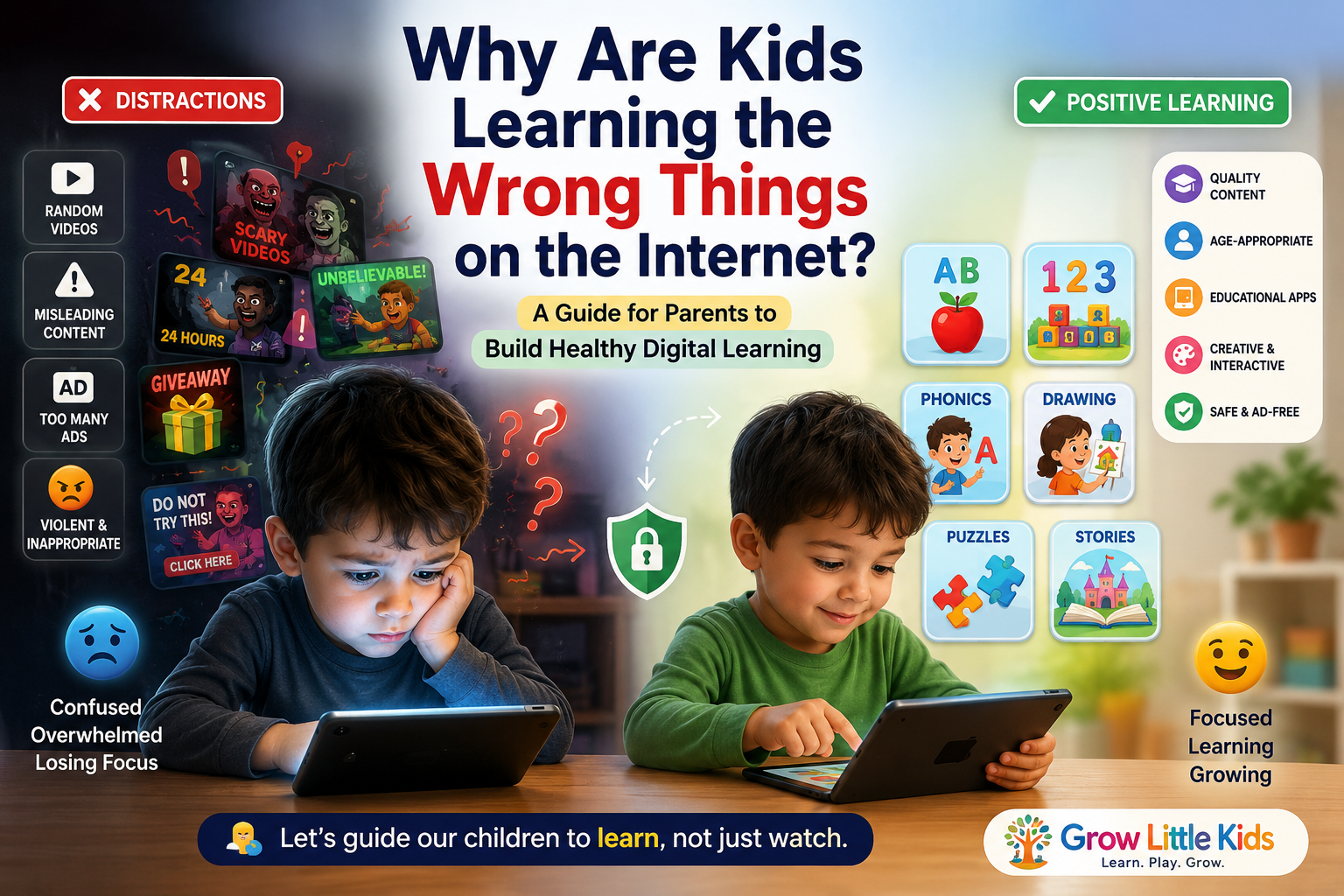
Algorithms don't care how old your child is. A kid searching for a cartoon video can — within three clicks — end up watching violent content, adult material, or graphic news footage.
Platforms like YouTube have billions of hours of video. Moderation cannot catch everything. What looks like a children's video in the thumbnail can hide disturbing content inside.
What to do:
- Enable YouTube Kids instead of the main app for children under 10.
- Turn on Restricted Mode on every device, not just the family tablet.
- Use a DNS-based filter like CleanBrowsing or OpenDNS Family Shield at the router level — it blocks entire categories of websites automatically.
- Check their watch history regularly — not to spy, but to start conversations.
2. Online Predators — They Know Exactly How to Talk to Children
This is the one topic most parents avoid because it feels too dark. But child safety experts agree: avoiding this conversation is the single biggest mistake parents make.
Predators don't look scary online. They're patient. They spend weeks, sometimes months, building trust — sending compliments, listening to problems, pretending to be a teenager. This process is called grooming, and it's alarmingly common.
Platforms they target: Roblox, Minecraft, Discord, Snapchat, Instagram DMs, and even online gaming chats.
Warning signs your child may be in contact with one:
- Becomes secretive about who they're talking to online.
- Switches screens or closes the phone quickly when you walk by.
- Receives gifts, money, or gaming credits from someone they 'met online'.
- Becomes withdrawn, anxious, or emotionally distant.
What to do:
- Have an honest, calm conversation — not a lecture. Ask: 'Has anyone online ever made you feel weird or uncomfortable?'
- Make sure your child knows they can come to you without getting in trouble.
- Enable friend request restrictions on all gaming and social platforms.
- Never allow a child to use chat-based games without parental oversight.
3. Cyberbullying — It Follows Them Home
Bullying used to end at the school gates. Now it follows children into their bedrooms at 11pm. A mean comment, a fake account, a group chat used to humiliate — these can destroy a child's confidence in ways that last years.
According to UNICEF, 1 in 3 young people in 30 countries report being a victim of cyberbullying. Worse, most children never tell a parent — because they fear the response will be to take away the device.
Signs of cyberbullying:
- Visible upset or anger after using a device.
- Reluctance to go to school or talk about friends.
- Suddenly stops using a platform they used to love.
- Trou睡ing, eating, or concentrating.
What to do:
- Create a family rule: 'You will never get in trouble for telling me something bad happened online.'
- Document the abuse (screenshots) before blocking or reporting.
- Report to the platform and, if threats are involved, to local authorities.
- Talk to the school — cyberbullying almost always has an offline dimension too.
4. Social Media and the Self-Image Trap
Instagram, TikTok, and Snapchat are not just social platforms for children — they are comparison engines. Children as young as 8 are consuming a constant stream of filtered, perfected, unrealistic bodies, lives, and achievements.
Research from the American Psychological Association links heavy social media use in adolescents to increased rates of anxiety, depression, and low self-esteem — particularly in girls.
What actually happens: A child who sees 50 posts a day of 'perfect' peers begins unconsciously measuring their own worth against highlights that aren't even real.
What to do:
- Delay social media access as long as reasonably possible. Many child experts now recommend no personal social media accounts before age 14.
- If your child is older and using platforms, follow them. Not to monitor every post — but to stay connected.
- Regularly talk about what 'filters' and 'editing' do to images. Media literacy is a skill, not a lecture.
- Build offline confidence intentionally — sports, arts, community — things that can't be liked or unliked.
5. Gaming Addiction and Manipulative Game Design
Modern games are not designed to be finished. They're designed to be played forever. Reward loops, loot boxes, daily login bonuses, limited-time events — every mechanic is engineered to keep your child coming back.
This isn't an accident. Game developers borrow directly from the psychology of slot machines.
Signs of gaming addiction:
- Rage or meltdowns when you ask them to stop.
- Lying about how long they've been playing.
- Skipping meals, sleep, or homework to play.
- Loss of interest in everything that isn't gaming.
What to do:
- Use Screen Time (iOS) or Digital Wellbeing (Android) to set hard daily limits.
- Create device-free times: during meals, one hour before bed, the first hour after school.
- Don't ban gaming completely — it often backfires. Instead, negotiate and enforce agreed limits together.
- Play games with your child sometimes. You'll understand the pull — and have a conversation opener.
6. Privacy — Children Share Everything Without Realizing It
Children have no natural concept of permanent digital footprints. They'll share their school name in a TikTok, their neighbourhood in a YouTube video, their full birthday on a game profile — without a second thought.
This information is collected, stored, and sometimes sold. It can also be used by bad actors to locate a child in the physical world.
What to do:
- Audit every account your child has. What information is public? What's their display name? Does their profile photo show their face?
- Teach the rule: never share full name, school, address, phone number, or photos showing your location online — ever.
- Use privacy-first search engines like DuckDuckGo for kids doing research.
- Go through privacy settings on every app together — make it a habit, not a one-time thing.
7. Misinformation and Propaganda
Children are not equipped to evaluate the credibility of what they read online. False health claims, conspiracy theories, extremist content — these spread faster than facts, and they are specifically designed to feel believable.
A 10-year-old who reads that 'vaccines cause harm' or 'this group of people are the enemy' doesn't have the critical thinking tools to push back without guidance.
What to do:
- Teach the habit of asking: 'Where did this come from? Who wrote it? Why might they want me to believe this?'
- Bookmark reliable sources for children: BBC Newsround, National Geographic Kids, DKfindout.
- When your child shares something alarming, resist the urge to immediately correct — ask questions first. 'That's interesting — where did you see that?'
The Most Important Thing You Can Do
None of the tools, apps, or filters in the world replace an open relationship between a parent and a child.
Children who feel they can talk to their parents without judgment are far less likely to hide dangerous online interactions. They're more likely to come to you when something feels wrong.
Start the conversation today. It doesn't have to be perfect. It just has to happen.
Because the internet isn't going anywhere — but neither are you.