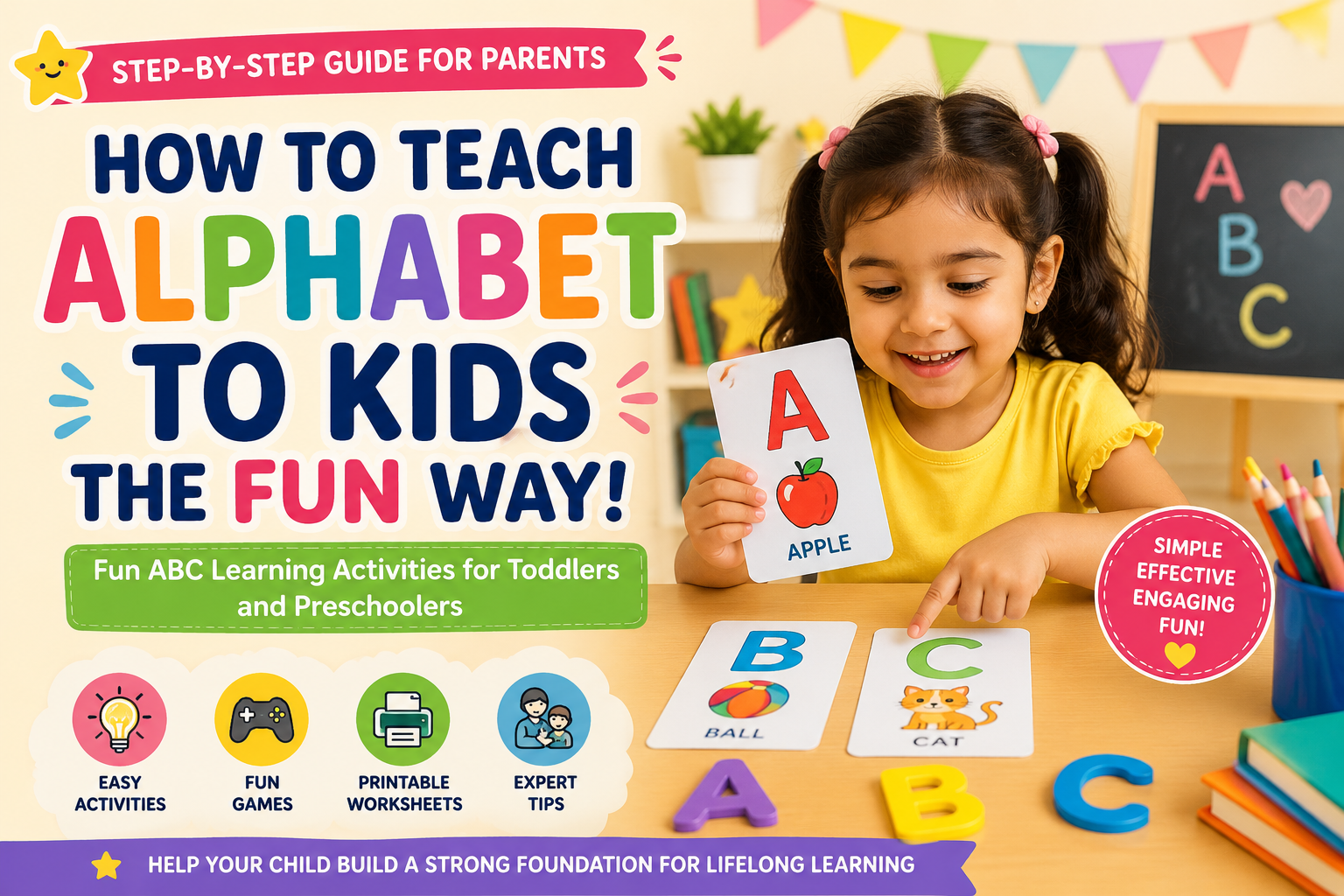
Why Early Alphabet Learning Matters
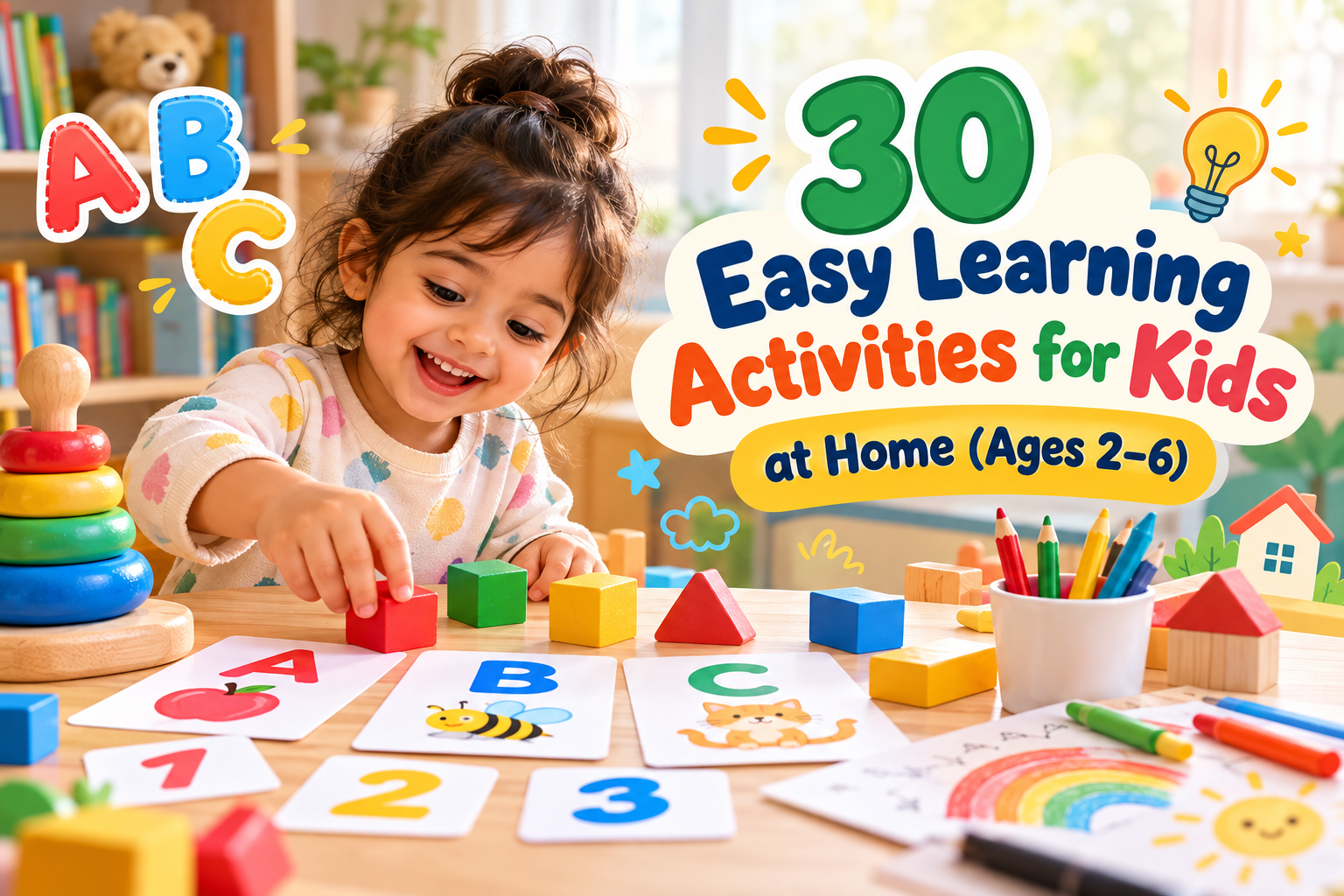
Research consistently shows that children who learn to recognize letters before kindergarten develop stronger reading skills later. But here's the secret most parents miss — it doesn't have to be boring. When alphabet learning feels like play, kids absorb it naturally.
The key is to weave letter recognition into everyday moments — bath time, snack time, walks in the park. Your child's world is full of letters waiting to be discovered!
5 Fun ABC Activities You Can Try at Home
1. Alphabet Treasure Hunt 🔍
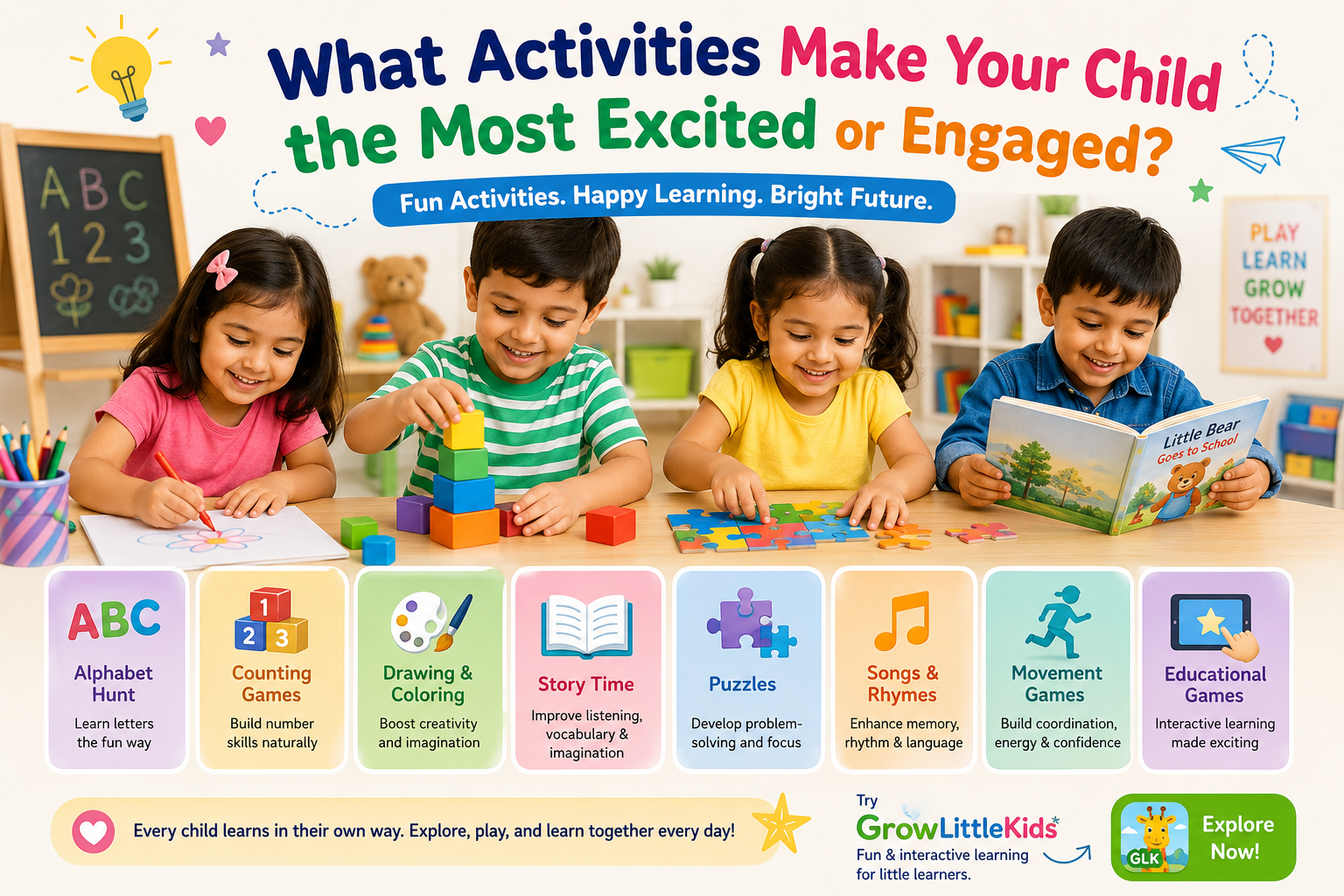
Hide foam letters around your living room and challenge your toddler to find them. Every time they discover one, say the letter name and its sound together. This combines physical activity with phonics — a win-win for little learners!
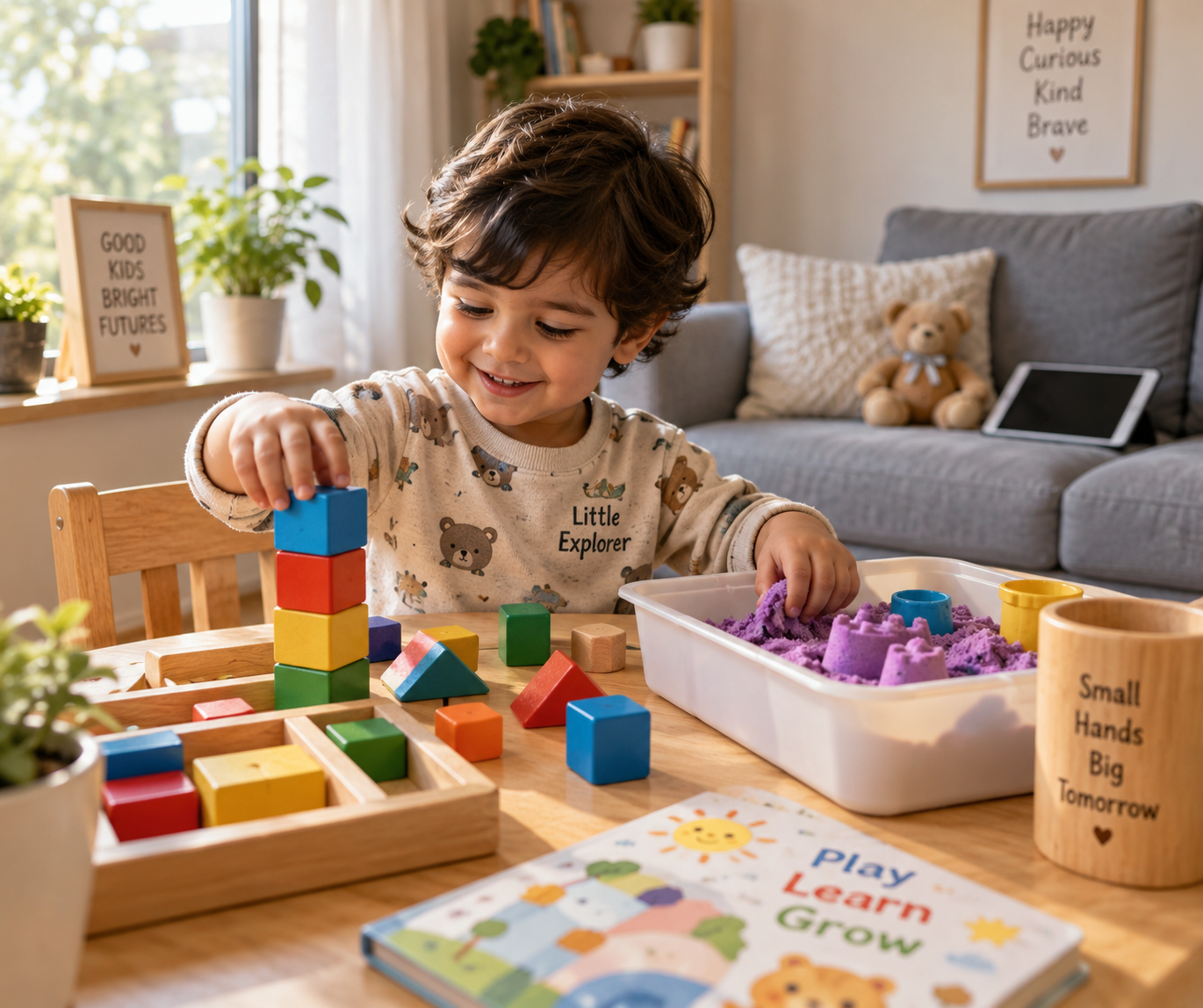
2. Finger Tracing on Sand or Salt Trays ✏️
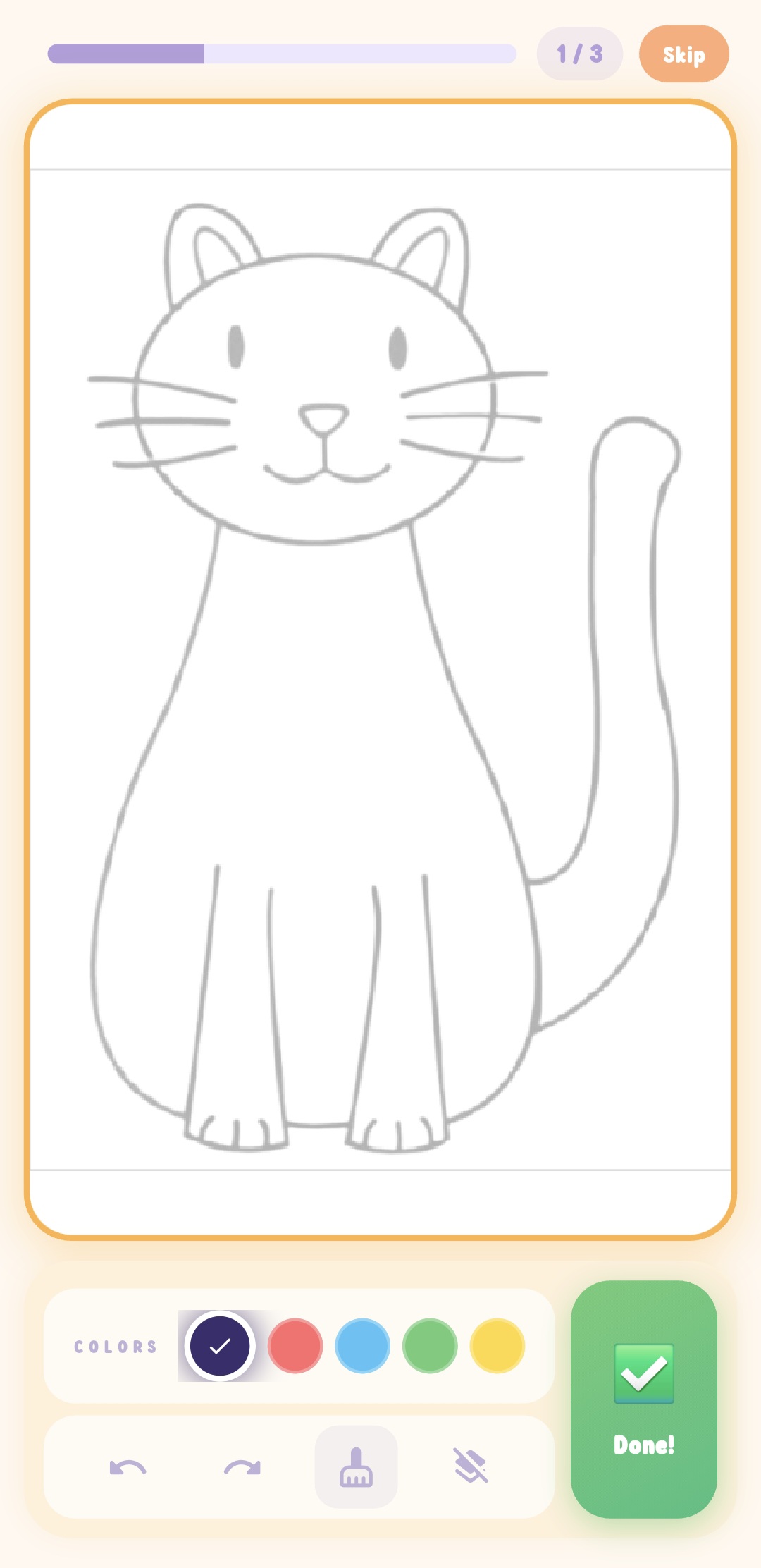
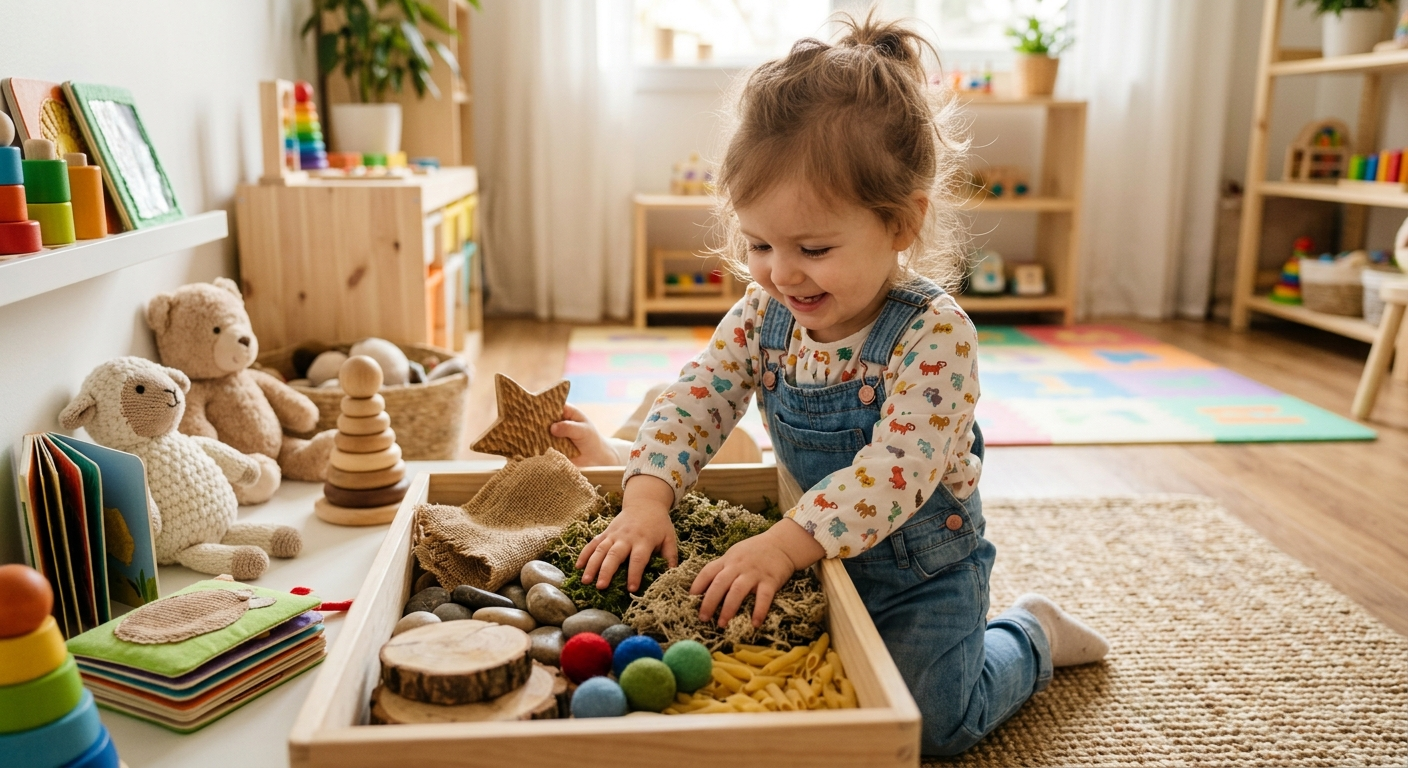
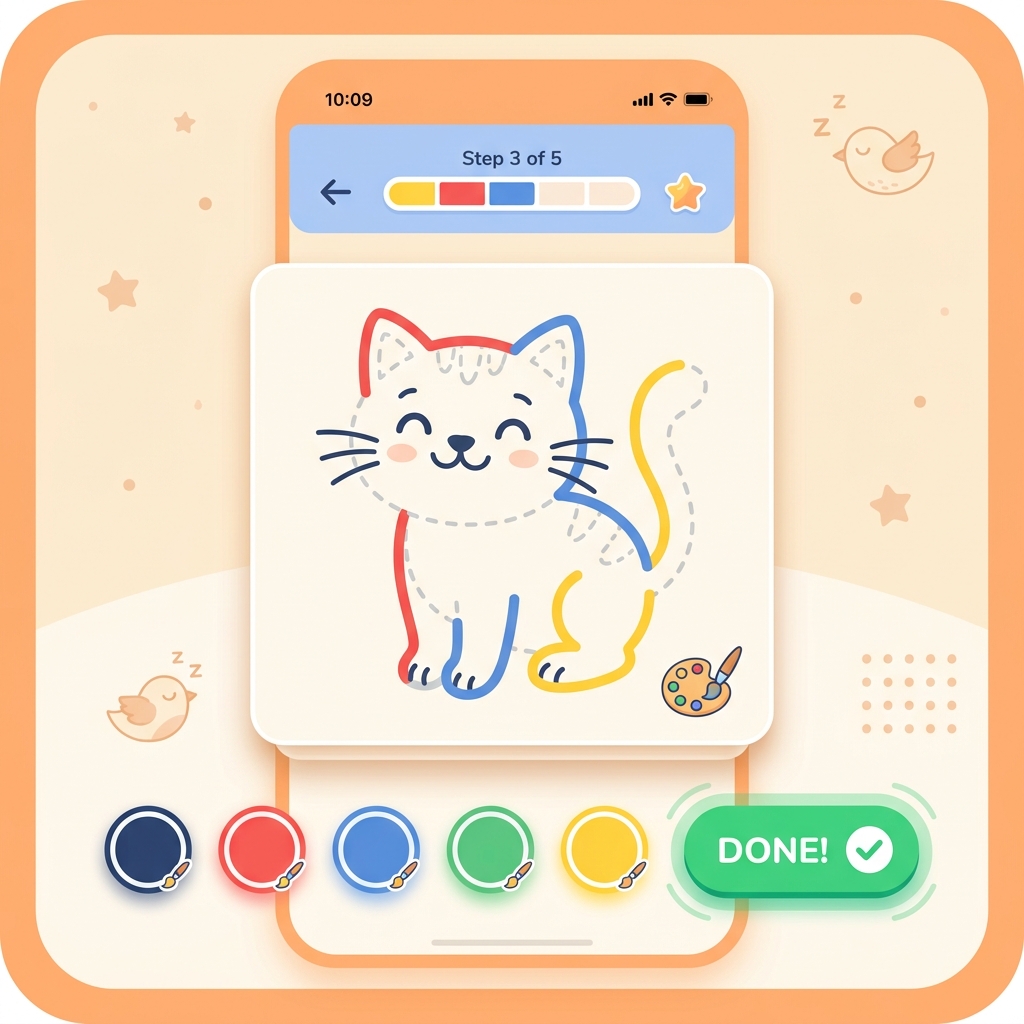
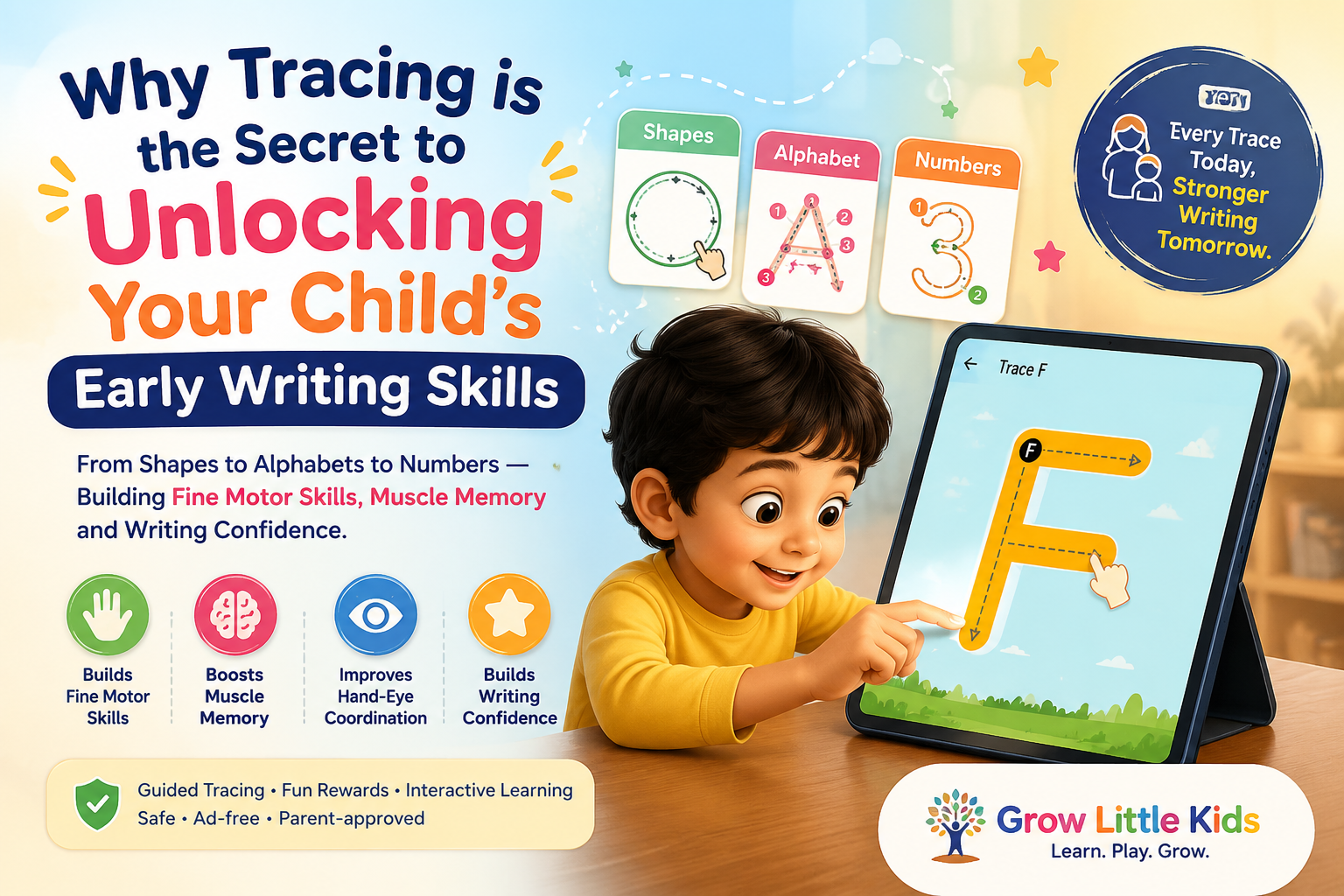
Pour salt or sand onto a flat tray and let your child trace letters with their finger. This tactile experience strengthens fine motor skills while making letter shapes memorable. Apps like GrowLittleKids offer digital tracing that works the same way — with guided paths and fun sound effects.
3. Sing the Alphabet — But Differently 🎵
Instead of the traditional ABC song, try slowing it down and pointing to each letter. You can also sing it backwards, skip letters, or pause and ask "what comes next?" This builds recall, not just recitation.
4. Letter Matching with Everyday Objects 🧩
Ask your child: "Can you find something that starts with B?" This simple game teaches phonics awareness — connecting the letter to its sound in real-world context. Start with easy letters like B (ball, banana) and work up to tricky ones like Q and X.
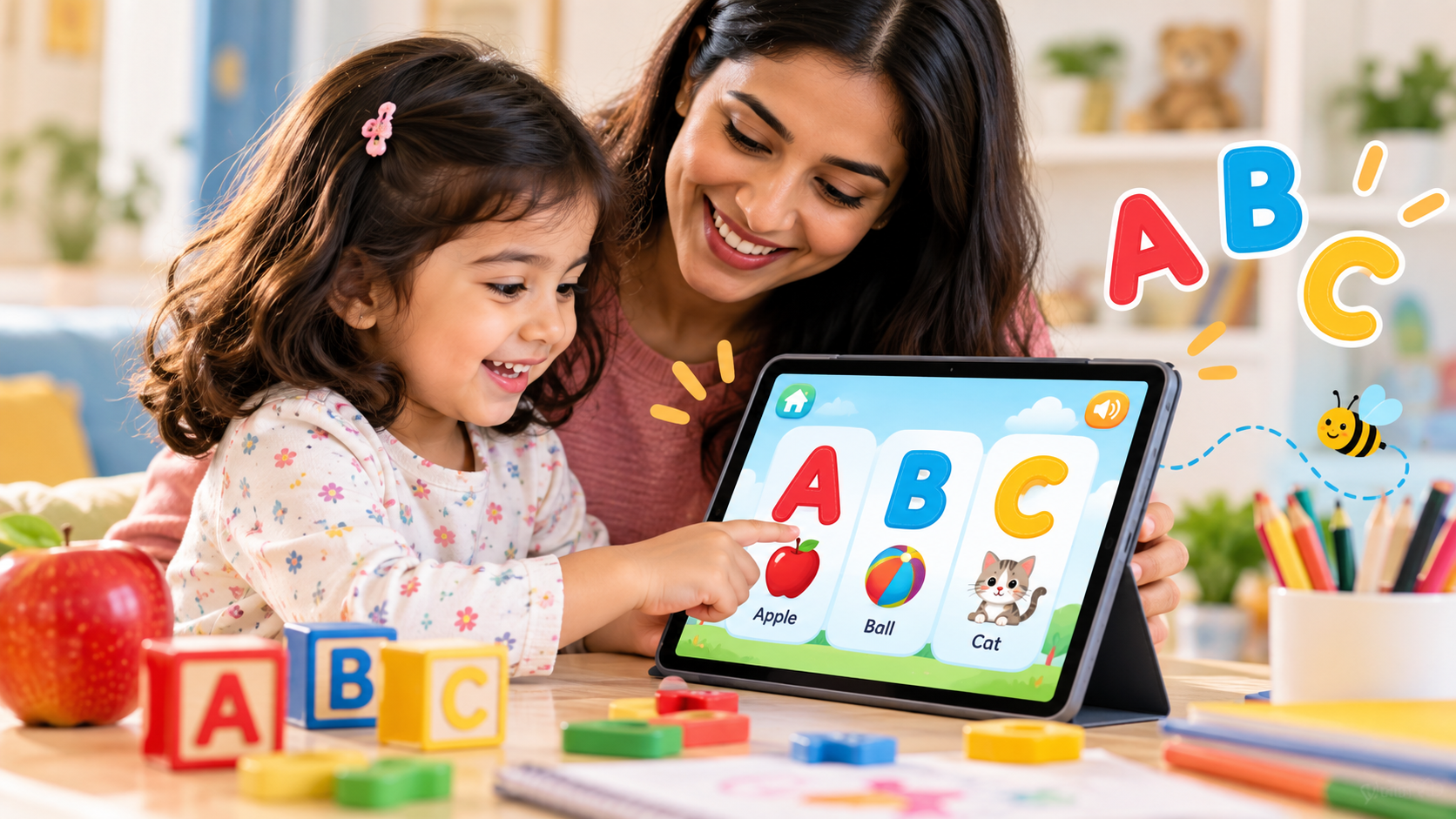
5. Interactive Learning Apps 📱
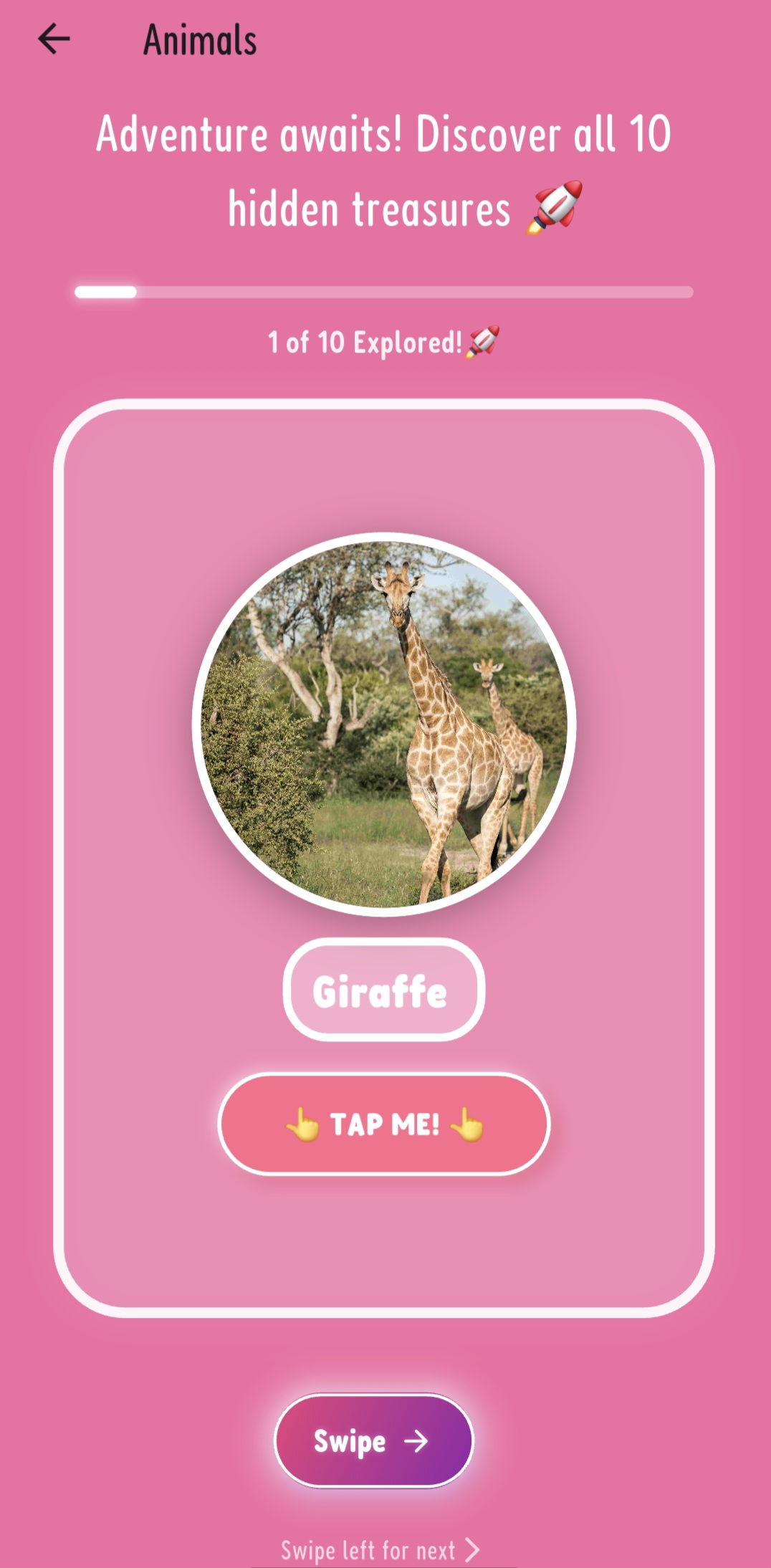
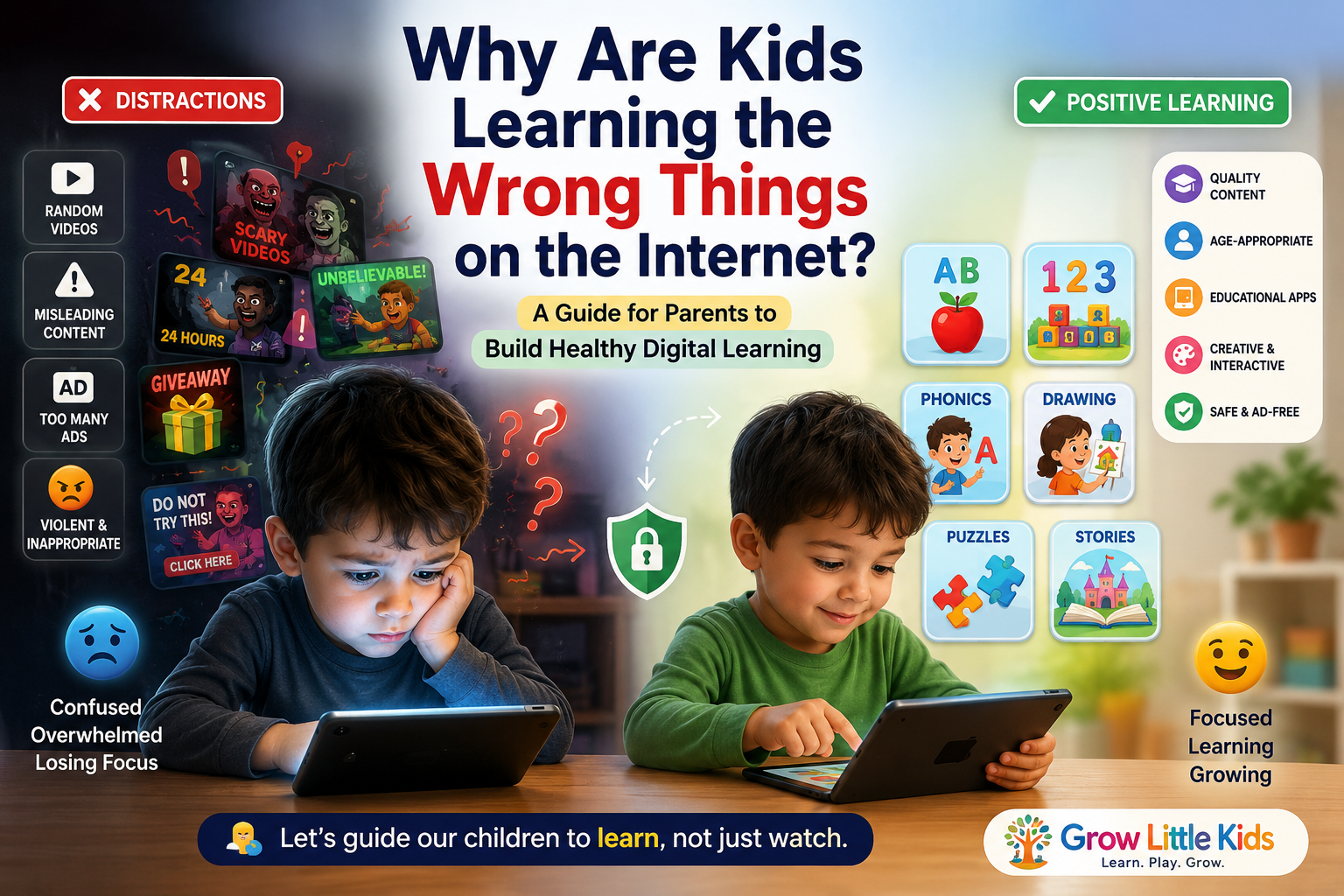
A well-designed kids learning app can reinforce what you teach at home. Look for apps that combine ABC learning with tracing, phonics sounds, and animations — like GrowLittleKids, which was built specifically for children aged 3–6.
When Should Kids Start Learning the Alphabet?
Most children can start recognizing letters between ages 2 and 3. By age 4, many kids can identify most uppercase letters. By kindergarten age (5–6), the goal is to know both uppercase and lowercase letters and their sounds.
Remember — every child learns at their own pace. The most important thing is to make it enjoyable. If your child resists, take a break and try again later. Pressure kills curiosity.
How GrowLittleKids Helps with ABC Learning
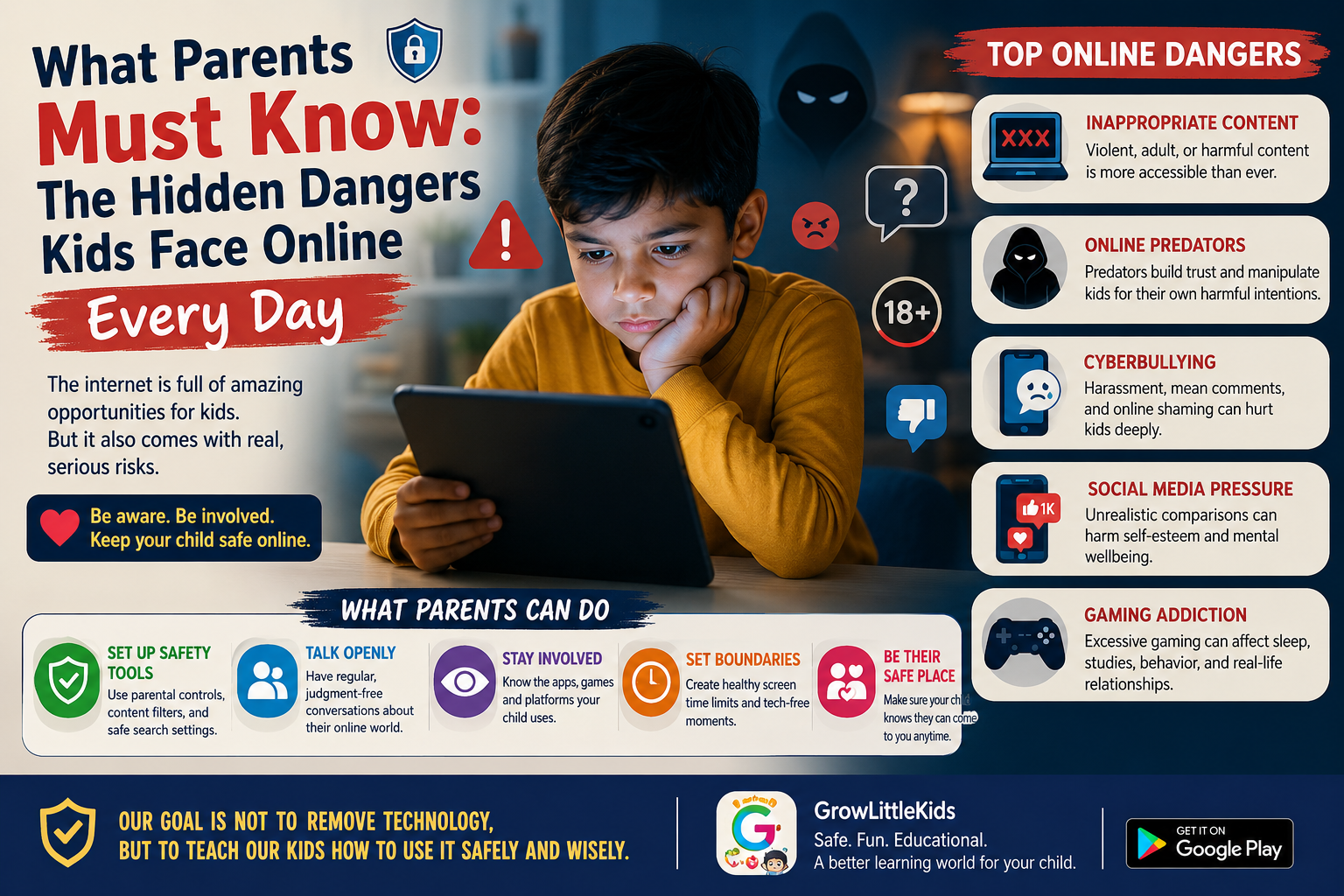
The GrowLittleKids app includes dedicated alphabet tracing activities with guided paths, phonics sounds for every letter, and fun animations that celebrate progress. It's 100% free, COPPA-compliant, and designed to be safe for independent play.
Whether your child is just starting with letter recognition or ready to practice writing, the app adapts to their level and keeps them engaged with colorful, interactive experiences.
Final Tip for Parents
The best alphabet learning happens when it feels like a game, not a test. Celebrate small wins — recognizing one new letter is a big deal for a toddler! Mix screen-based activities with hands-on play, and you'll be amazed at how quickly your child picks up their ABCs. 🌟