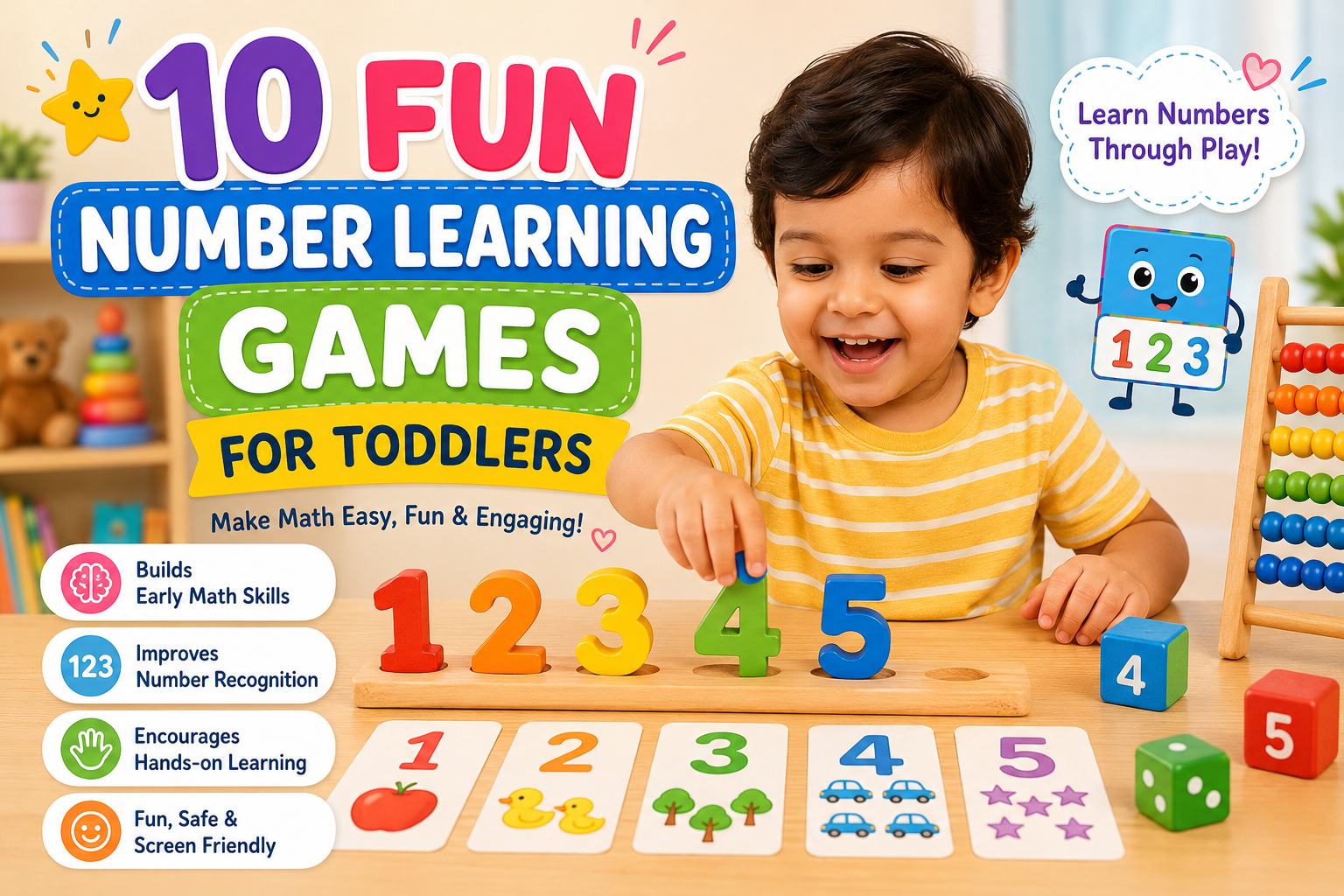
Why Number Skills Matter Before Kindergarten
Numbers are the building blocks of everything — from telling time to sharing cookies equally. Research from Harvard's Center on the Developing Child shows that children who develop early number sense perform better in math throughout elementary school and beyond.
But here's the good news: you don't need to be a math teacher to help your child learn numbers. In fact, the most effective number learning for preschoolers happens through play, repetition, and real-life experiences — not worksheets.
What Is Number Sense and Why Does It Matter?
Number sense is more than just counting 1, 2, 3. It includes understanding what numbers mean, how they relate to each other, and how they work in the real world. A child with strong number sense can:
- Recognize that "3" means three objects — not just a word to recite
- Understand that 5 is more than 3
- See patterns (2, 4, 6, 8...)
- Use numbers to solve simple problems ("If I have 2 cookies and get 1 more, I have 3!")
Building this foundation early makes formal math in school feel natural rather than intimidating.
7 Fun Activities to Teach Numbers at Home
1. Snack-Time Counting 🍎
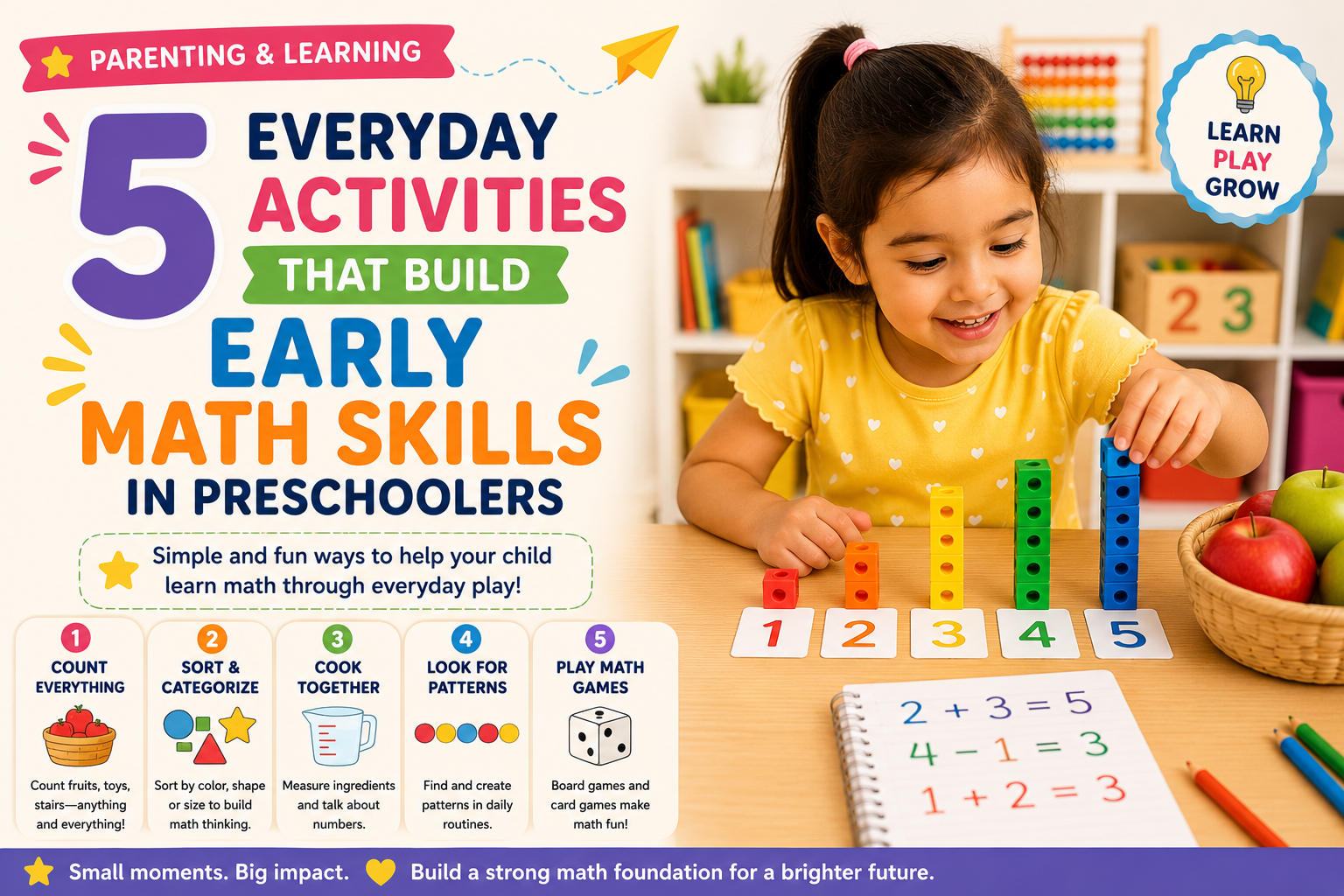
Turn snack time into a counting lesson. Place 5 grapes on a plate and count them together: "One, two, three, four, five — you have five grapes!" Then ask, "Can you give me two?" This teaches one-to-one correspondence and subtraction concepts without your child even knowing it.
Why it works: Food is motivating! When counting leads to eating, kids are naturally engaged and eager to participate.
2. Number Hopscotch 🏃
Draw a hopscotch grid with numbers 1–10 using chalk on your driveway or sidewalk. As your child jumps, they call out each number. You can add variations: "Jump only on even numbers!" or "Start from 10 and count backwards!"
This combines physical movement with number recognition — a powerful combination for kinesthetic learners who need to move to learn best.
3. Number Treasure Boxes 📦
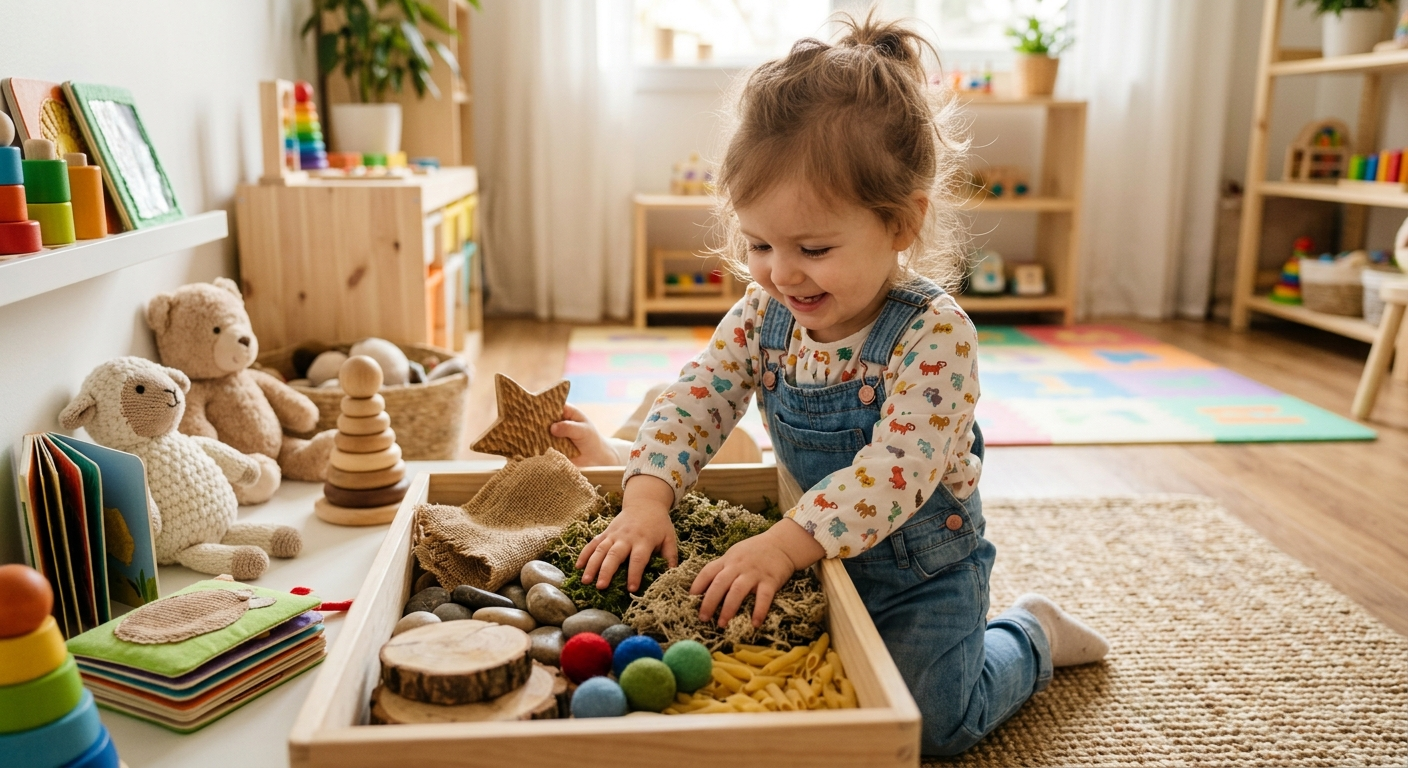
Label 10 small containers (or cups) with numbers 1 through 10. Give your child a pile of small objects — buttons, dried pasta, pom-poms — and ask them to put the matching number of items in each box. Box labeled "3"? Put 3 buttons inside.
This hands-on activity builds cardinality — the understanding that the last number you count represents the total quantity. It's one of the most important math concepts for preschoolers.
4. Daily Routine Counting 🕐
Weave numbers into your daily conversations naturally: "You have 2 shoes to put on," "We need 4 plates for dinner," "There are 3 more minutes until bath time." When children hear numbers used purposefully, they understand that numbers aren't just abstract symbols — they describe the real world.
Even climbing stairs becomes a lesson: count each step together, and your child absorbs number sequence without any effort.
5. Number Tracing with Guided Apps ✍️
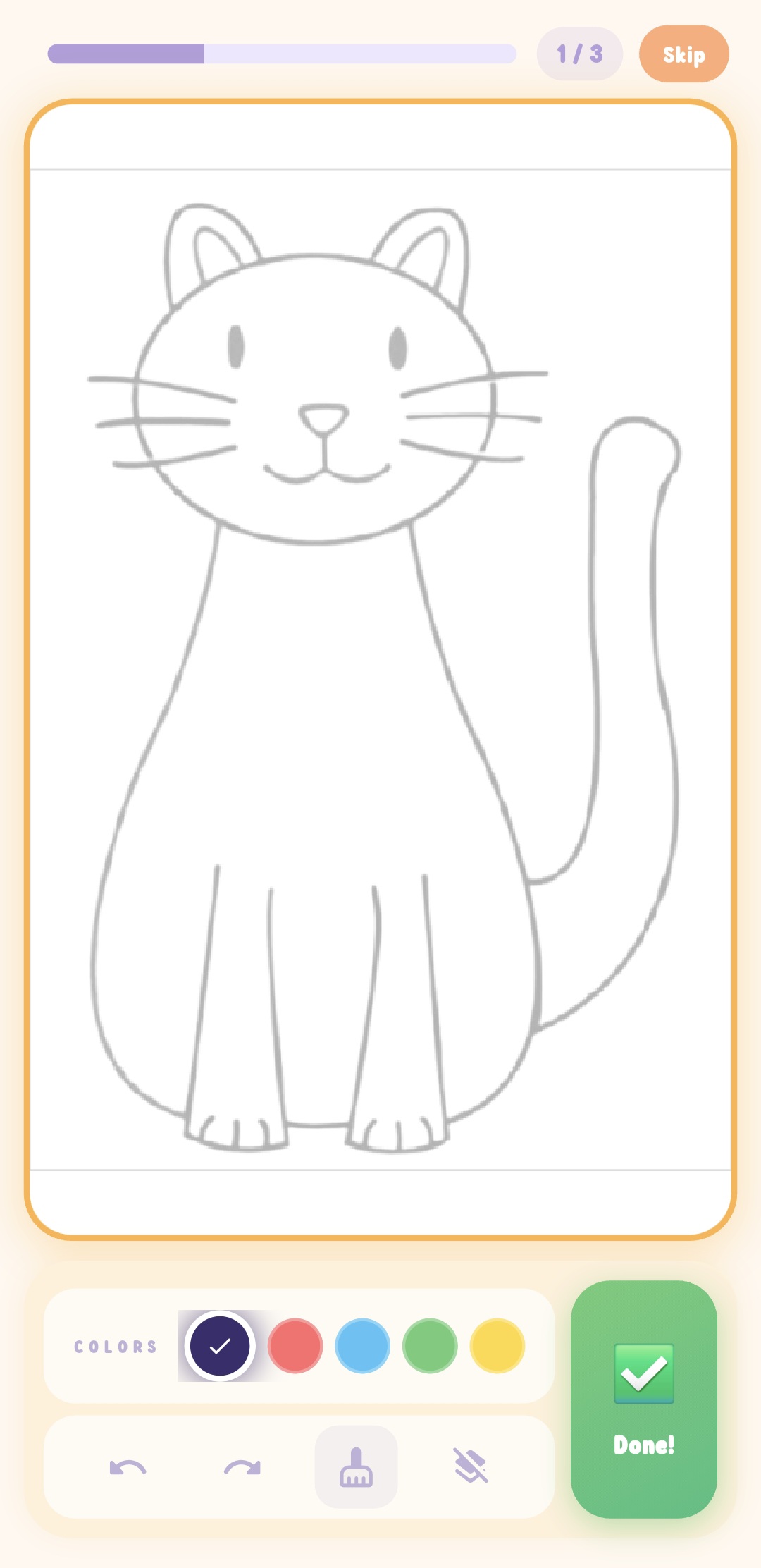
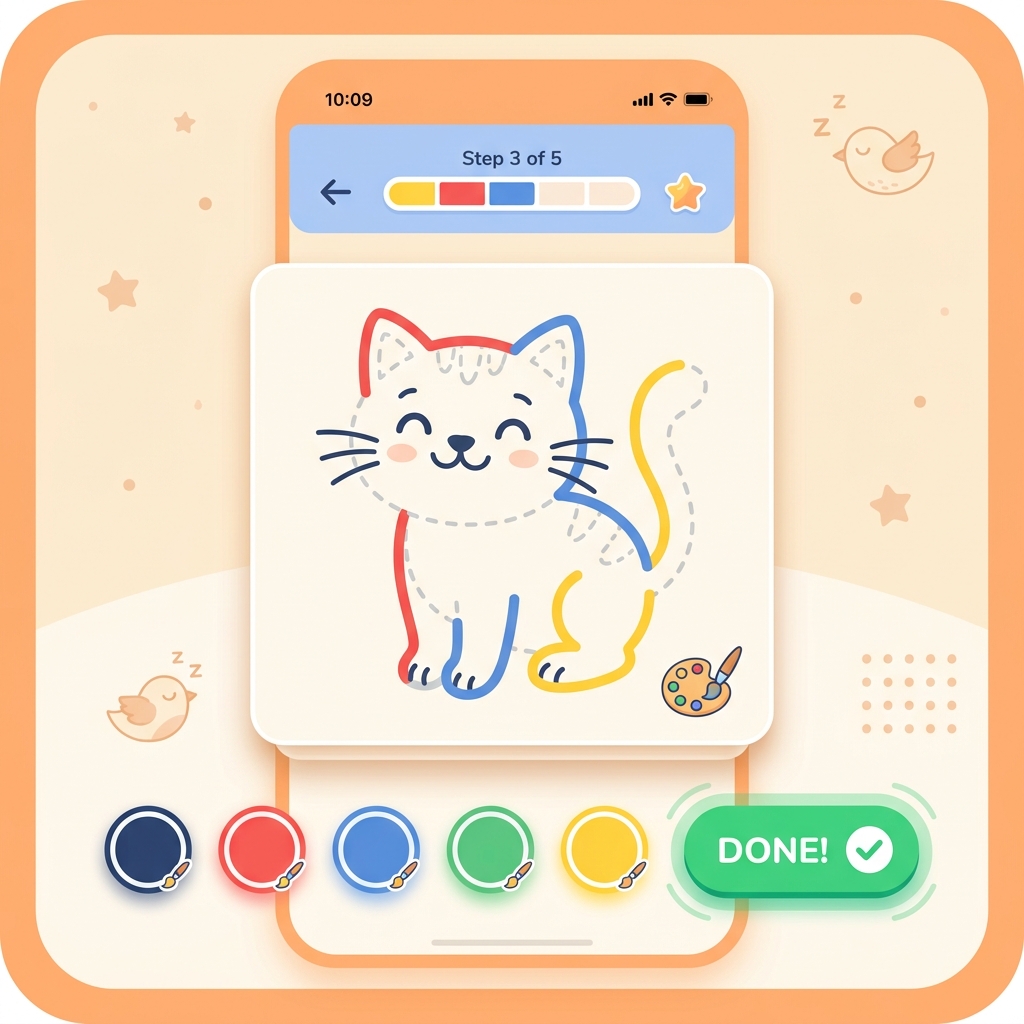
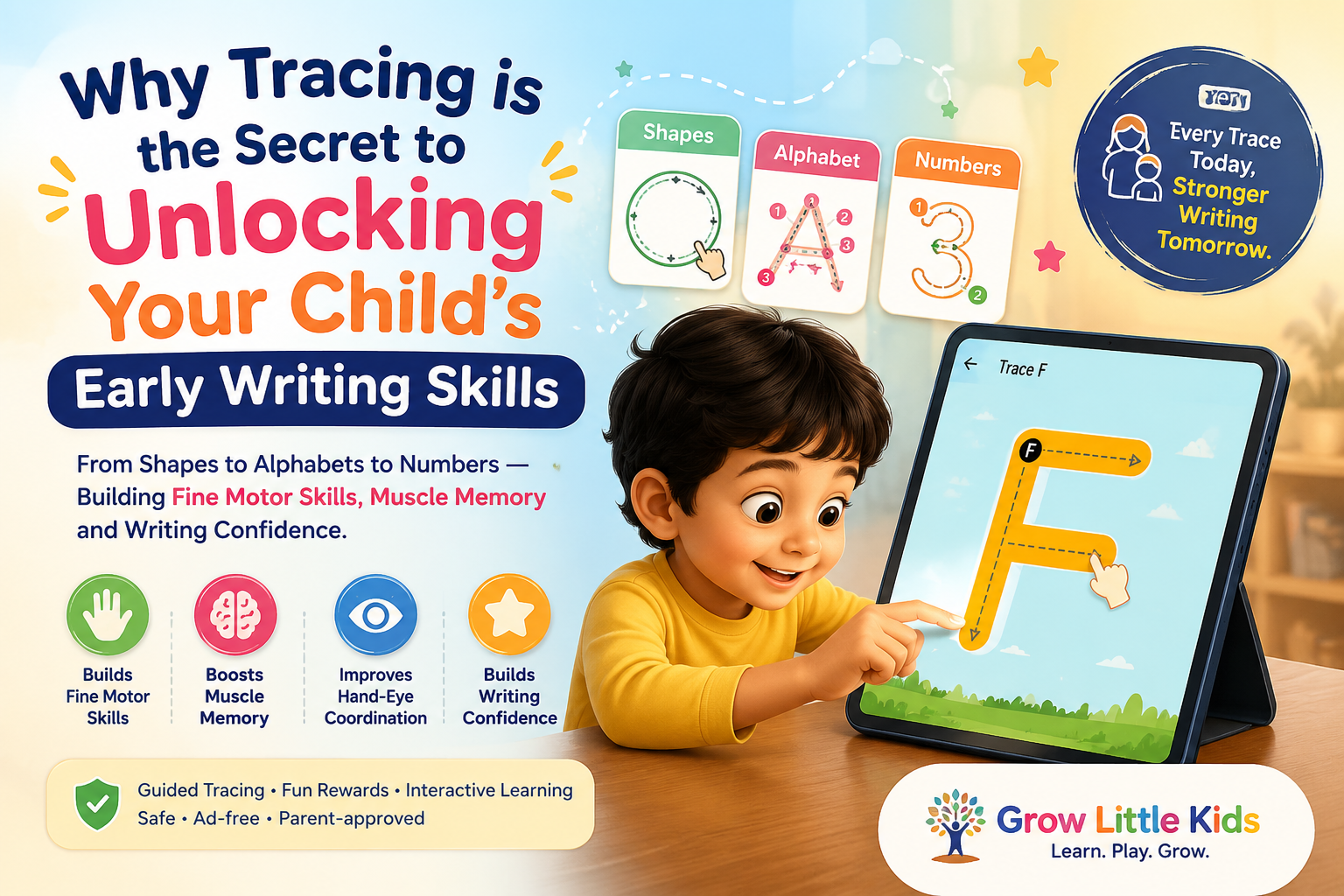
Just like letter tracing helps with alphabet learning, number tracing builds both recognition and fine motor skills. Let your child trace numbers on paper, in sand, on a steamy mirror, or using a guided tracing app.
The GrowLittleKids app offers animated number tracing with sound effects and celebrations — when your child traces "5" correctly, they see confetti and hear encouraging sounds. This positive reinforcement makes them want to practice more!
6. Singing Number Songs 🎵
Songs are powerful memory tools. Classics like "Five Little Monkeys," "10 Green Bottles," and "One, Two, Buckle My Shoe" teach counting in sequence while being incredibly fun. Try singing them during car rides, bedtime, or while playing.
For a twist, try counting backwards with rocket launch countdowns: "10, 9, 8, 7, 6, 5, 4, 3, 2, 1... BLAST OFF!" This teaches reverse counting and builds excitement around numbers.
7. Building Block Towers 🧱
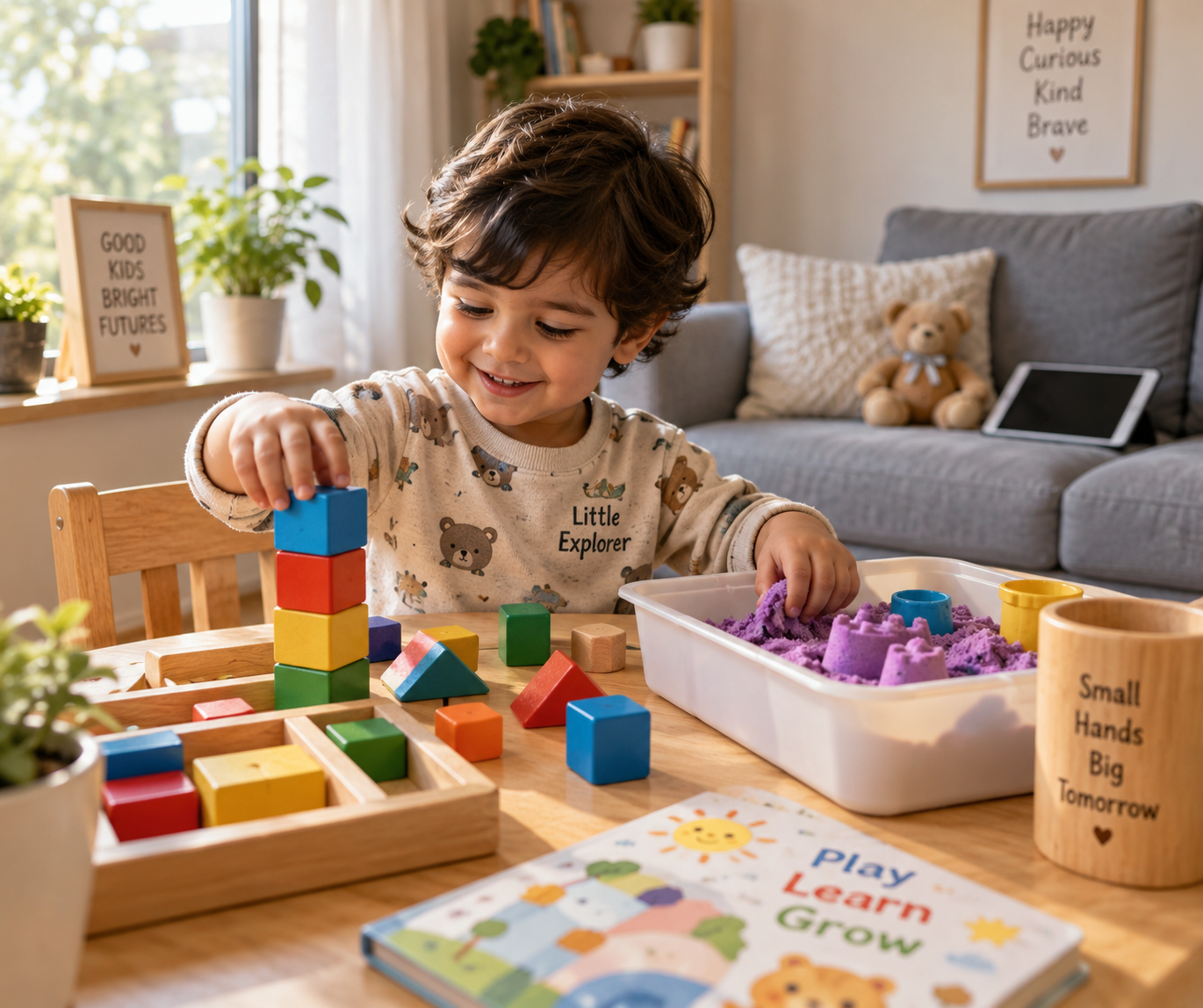
Ask your child to build a tower with exactly 6 blocks, then 8, then 4. Compare towers: "Which tower is taller? Which has more blocks?" This introduces comparison, estimation, and spatial reasoning — all critical early math skills wrapped in pure play.
You can also create patterns with colored blocks: red, blue, red, blue — and ask "What comes next?" Pattern recognition is a foundational math skill that starts right here.
Number Milestones: What to Expect by Age
Every child develops differently, but here's a general guide for number skills:
- Age 2–3: Can count to 3–5, recognizes that numbers exist, may count objects with help
- Age 3–4: Can count to 10, understands "more" and "less," starts recognizing written numbers
- Age 4–5: Can count to 20+, understands one-to-one correspondence, can compare quantities
- Age 5–6: Can count to 50+, begins simple addition/subtraction, recognizes number patterns
If your child isn't hitting these exactly — don't worry. Consistent, playful exposure matters far more than rigid timelines. Some children master counting early but take longer with number recognition, and vice versa.
Common Mistakes Parents Make When Teaching Numbers
Even well-intentioned parents sometimes make these mistakes:
- Rushing through counting: Saying numbers fast doesn't teach understanding. Slow down and point to each object as you count.
- Only rote counting: Reciting "1, 2, 3, 4, 5" without connecting to actual objects teaches memorization, not number sense.
- Drilling with pressure: Turning counting into a test creates anxiety. Keep it playful — if your child loses interest, stop and try again later.
- Skipping backwards counting: Counting down (10, 9, 8...) is just as important as counting up. It builds the foundation for subtraction.
How GrowLittleKids Makes Number Learning Fun
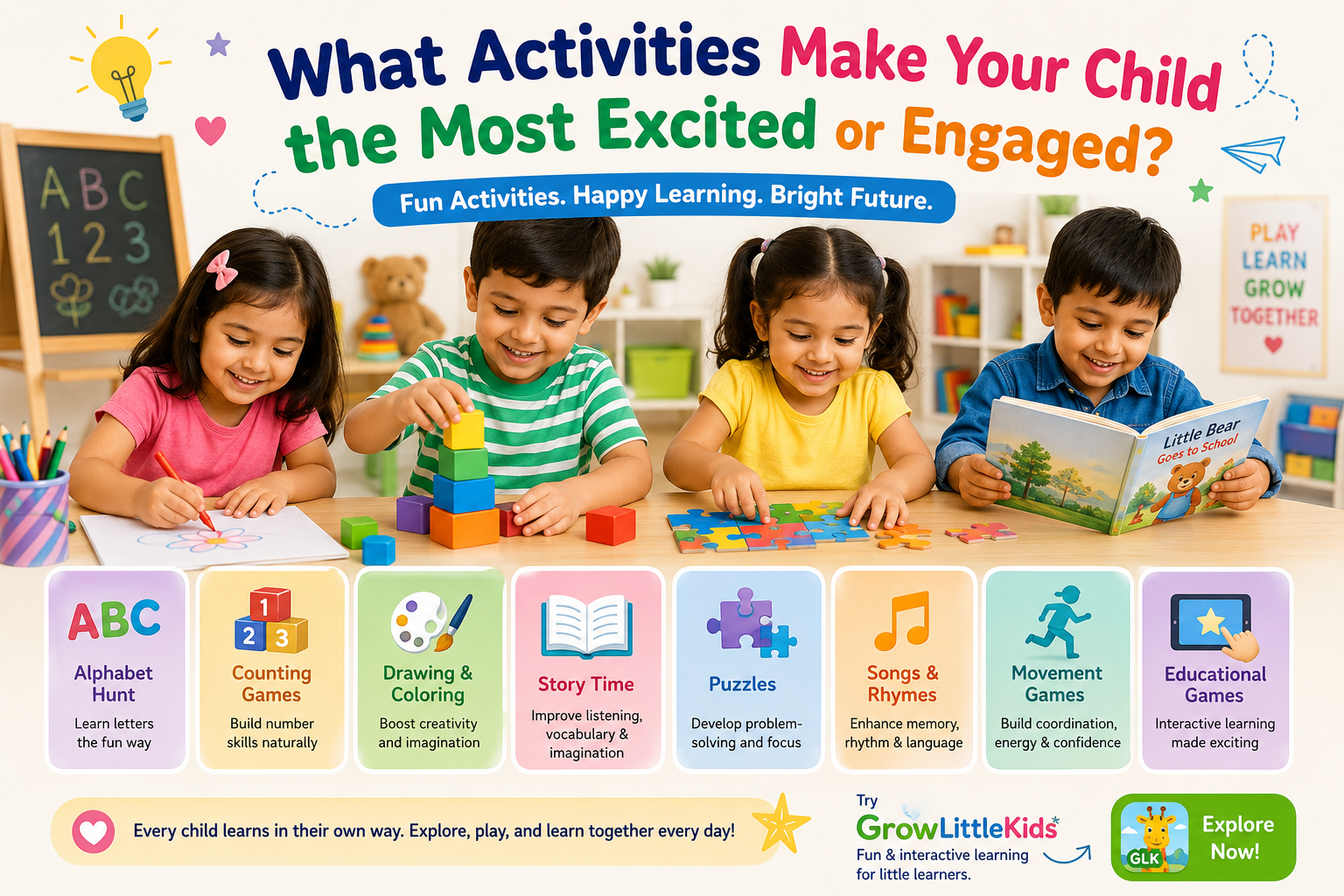
The GrowLittleKids app includes a complete number learning module designed for children aged 3–6, featuring:
- 🔢 Interactive number tracing with guided paths and animations
- 🎮 Counting games that adapt to your child's level
- 🎵 Number songs and rhymes for auditory learners
- 🏆 Progress tracking so you can see what your child has mastered
- 🔒 100% free, safe, and ad-friendly — no in-app purchases required
The app is designed for short, focused sessions of 10–15 minutes — perfect for maintaining attention without overstimulating your little one. Download it free on Google Play and watch your child fall in love with numbers! 🌟