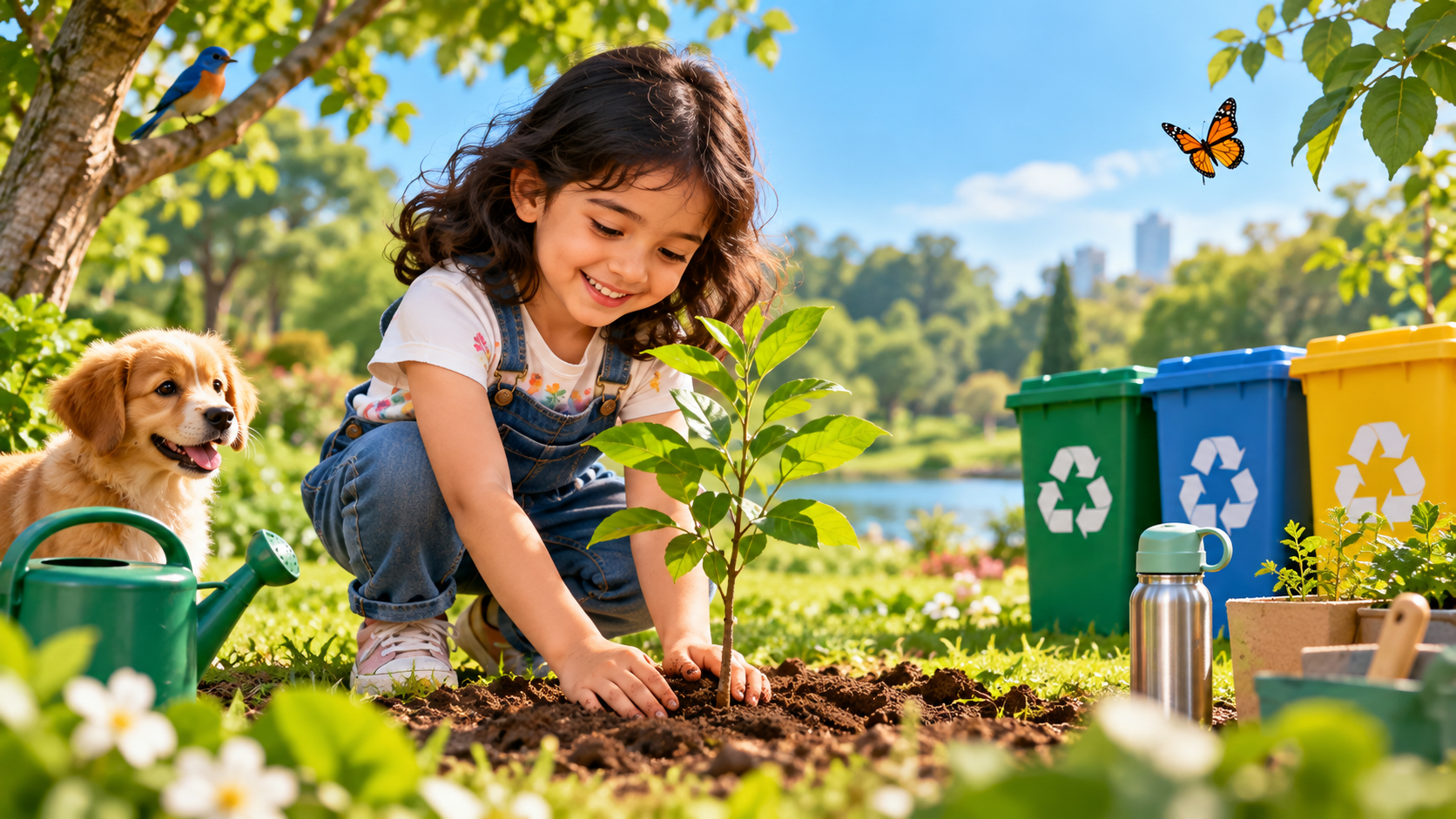
Small Actions Can Make a Big Difference
Children may be small, but their everyday actions can make a big difference to the world around them. Learning how to care for the environment helps children develop responsible habits while understanding why nature, plants, animals, water, and clean surroundings are important.
The good news is that kids do not need to do anything complicated. Simple habits such as turning off a light, saving water, avoiding unnecessary plastic, caring for plants, and keeping their surroundings clean can become meaningful ways to help the environment.
In this guide, we will look at 10 easy ways kids can help the environment every day at home, at school, and outdoors.
1. Save Water Every Day
Water is one of the most important natural resources we have. People, plants, and animals all need water to live, so children can start helping the environment by learning not to waste it.
Kids can save water by:
- Turning off the tap while brushing their teeth.
- Using only the water they need.
- Not playing with running water.
- Informing an adult when they notice a leaking tap.
- Using a watering can instead of leaving a hose running.
Parents can turn this into a simple challenge by asking children to notice how many times they remember to turn off the tap during the day.
Simple lesson: Every drop of water we save is a small step toward using our natural resources wisely.
2. Turn Off Lights and Save Electricity
Children can also help the environment by learning to use electricity responsibly.
Teach your child to switch off lights, fans, televisions, and other devices when they are no longer needed.
- Turn off the lights when leaving a room.
- Switch off the television after watching it.
- Turn off fans when nobody is using the room.
- Ask an adult before unplugging electrical devices.
Make it fun by giving your child the role of an "energy detective." Their job is to look around the house and find things that are switched on unnecessarily.
3. Reduce Unnecessary Plastic
Plastic is useful in many situations, but using more plastic than necessary can create extra waste. Children can learn simple habits that help reduce unnecessary plastic use.
For example, kids can:
- Carry a reusable water bottle.
- Use a reusable lunch box.
- Avoid taking unnecessary plastic bags.
- Reuse suitable containers and materials.
- Choose reusable products when possible.
Parents can explain the idea with a simple question:
"Can we use this again instead of throwing it away?"
This encourages children to think about their choices before creating waste.
4. Reuse and Recycle
Before throwing something away, encourage children to stop and think about whether it can be reused.
Old cardboard boxes, clean containers, paper, and other suitable materials can become creative projects.
- Turn cardboard boxes into toys.
- Use old paper for drawing.
- Reuse containers for organizing small items.
- Create crafts from clean recyclable materials.
- Learn which materials can be recycled locally.
Recycling rules can be different in different places, so parents should teach children how waste is separated in their local community.
5. Plant and Care for Trees
Trees are an important part of healthy ecosystems. They provide habitats for animals, contribute to greener surroundings, and make outdoor spaces more pleasant.
Children can develop a stronger connection with nature by helping care for plants and trees.
- Plant a small tree or plant with an adult.
- Water plants when they need water.
- Observe how plants change as they grow.
- Keep children from damaging young plants.
- Learn the names of trees around the home or school.
If your child is interested in learning more about protecting trees, you can also read our practical guide on how we can save trees and simple tips for kids and parents.
A simple plant-growth diary can make this activity even more exciting. Children can draw their plant every week and record how it changes.
6. Keep Parks, Streets, and Play Areas Clean
A clean environment is healthier and safer for people, plants, and animals.
Children can learn to take responsibility for their own waste instead of leaving wrappers, bottles, or food waste on the ground.
When visiting a park, garden, playground, or other outdoor space, encourage children to:
- Put rubbish in the appropriate bin.
- Take their own waste with them if there is no bin nearby.
- Keep food waste away from animals.
- Respect plants and flowers.
- Encourage friends to keep shared spaces clean.
If your family participates in a clean-up activity, children should always have adult supervision and should never touch sharp, hazardous, or unknown waste.
7. Take Care of Animals
Helping the environment also means learning how to respect the animals that share our world.
Kids can help animals by treating them with kindness and understanding that wild animals need their natural habitats.
- Watch wild animals from a safe distance.
- Never chase or hurt animals.
- Keep plastic and rubbish away from animals.
- Take proper care of pets with adult guidance.
- Tell an adult if they find an injured wild animal.
If your child wants to learn more about helping animals and protecting nature, read our guide on how to save animals and nature.
Children should never try to rescue or handle unfamiliar wild animals themselves. An adult or qualified wildlife professional should decide what help is needed.
8. Avoid Wasting Food
Food requires water, energy, land, and other resources before it reaches our plates. When food is wasted, those resources are wasted too.
Kids can help reduce food waste by:
- Taking only as much food as they can eat.
- Trying small portions of new foods first.
- Keeping suitable leftovers with help from an adult.
- Learning where different foods come from.
- Helping parents plan meals.
A simple family rule can help:
"Take what you need, and don't take more than you can finish."
9. Walk, Cycle, or Spend More Time Outdoors
When the distance is short and the route is safe, walking or cycling can be a fun way for families to spend time outdoors.
Instead of using a vehicle for every short journey, families can consider:
- Walking to a nearby park.
- Cycling together in a safe area.
- Walking to nearby places when practical.
- Using public transportation for suitable journeys.
Outdoor time also gives children an opportunity to notice trees, birds, insects, flowers, and other parts of nature.
Always follow appropriate road and cycling safety rules and make sure young children are supervised.
10. Teach Someone Else
One of the best ways children can help the environment is by sharing what they learn.
A child can remind a sibling to turn off the tap, show a friend how to put waste in the correct bin, or teach classmates about caring for plants.
Children can also create:
- An environment poster.
- A recycling chart.
- A nature drawing.
- A classroom presentation.
- A family list of eco-friendly habits.
When children teach other people, they often become more interested in practicing the habits themselves.
Fun Environmental Activities Kids Can Try
Learning about the environment does not have to feel like a school lesson. Families can turn environmental learning into fun activities.
🌱 Plant Growth Diary
Plant a seed or small plant with your child and let them record its progress.
They can draw the plant every few days and write down what has changed.
- Day 1: Plant the seed.
- Day 7: Look for changes.
- Day 14: Measure the plant.
- Day 21: Draw the new leaves.
♻️ Recycling Craft
Use clean recyclable materials to create something useful or fun.
An old cardboard box could become a pencil holder, toy garage, storage box, or creative art project.
🔍 Nature Walk
Take your child outside and turn a simple walk into a nature discovery game.
Ask them to find:
- Three different types of leaves.
- Two different flowers.
- One bird.
- One insect.
- Something that can be reused or recycled.
The goal is to observe nature respectfully rather than collecting or disturbing living things.
💧 Water-Saving Challenge
Give the family one simple goal:
"Let's save water today."
At the end of the day, ask your child what they did differently. This turns an everyday habit into an opportunity for learning.
Why Should Kids Learn About the Environment?
Children are naturally curious about the world around them. When they learn how everyday choices affect nature, they can begin developing responsible habits from an early age.
Environmental learning can help children understand:
- Why natural resources should not be wasted.
- Why reducing waste is important.
- Why plants and trees need care.
- Why animals need safe habitats.
- Why clean surroundings matter.
- How everyday choices can affect the environment.
The goal is not to make children responsible for solving every environmental problem. Instead, it is about helping them understand that everyone can contribute through small, positive actions.
How Parents Can Encourage Eco-Friendly Habits
Parents do not need to create complicated environmental lessons. Children learn a lot by watching what adults do every day.
Parents can:
- Save water together.
- Turn off unused lights and devices.
- Use reusable products.
- Avoid unnecessary waste.
- Spend time outdoors.
- Grow plants together.
- Talk about where food and products come from.
- Praise children when they make thoughtful choices.
Try to make these habits positive rather than turning them into punishments.
Instead of saying "Don't waste water," try saying:
"Let's see if we can remember to turn off the tap every time we're finished."
Small challenges can make environmental habits more enjoyable for children.
Small Actions Today Can Help Tomorrow
Kids do not need to do something huge to help the environment.
Turning off a light, saving water, reusing an item, putting rubbish in the correct place, caring for a plant, or treating an animal kindly may seem like small actions.
But when families, schools, and communities practice responsible habits together, those small actions can add up.
The most important lesson for children is simple:
Take care of the world around you.
When kids learn to respect nature today, they can develop habits that help create a cleaner, healthier, and more thoughtful world as they grow.
Final Thought
Helping the environment does not have to be difficult.
For kids, it can start with something as simple as turning off a light, closing a tap, putting rubbish in the right place, caring for a plant, or being kind to an animal.
Small habits today can help build a healthier world tomorrow.
At Grow Little Kids, we believe learning is not only about letters and numbers. Children can also learn by exploring nature, asking questions, and developing positive everyday habits.